Your cart is currently empty!
Top 10 Vietnamese Foods: A Complete Guide
Introduction to Vietnamese Cuisine
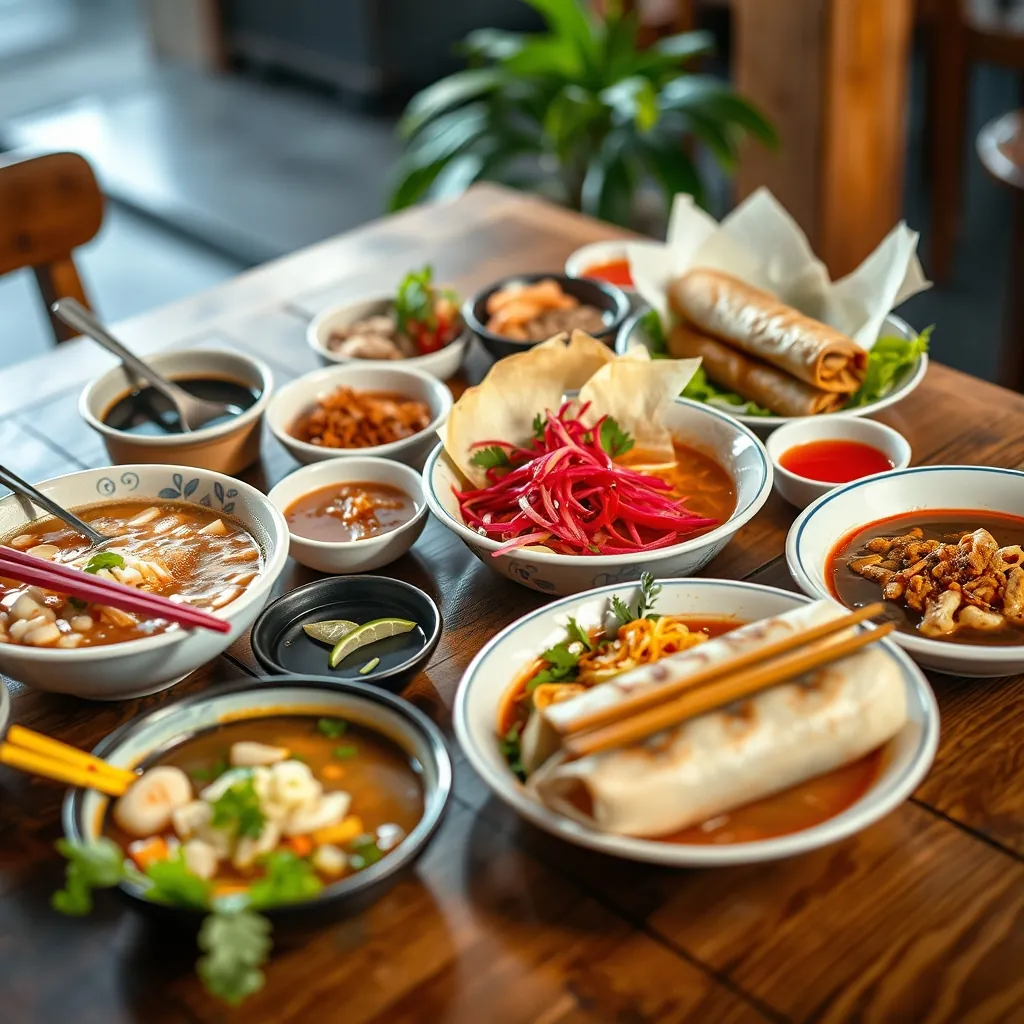
Vietnamese food is a masterclass in balance. It is not just about heat or spice. It is about the harmony of salty, sweet, sour, and bitter flavors, all anchored by the unmistakable freshness of herbs. A single bowl can deliver crunch from bean sprouts, fragrance from mint and basil, and a punch of umami from fish sauce.
This culinary tradition is deeply regional. The north, with Hanoi at its heart, favors subtle, savory broths. The central region, including Hue, brings bold spice and color. The south, led by Ho Chi Minh City, leans toward sweetness and generous portions of fresh produce. Each region tells a different story through its food.
Vietnam’s cuisine also reflects its history. The Chinese influence is clear in noodle soups and stir-fries. The French left behind baguettes and a taste for coffee. Yet the Vietnamese made every influence their own. The result is a street food culture that draws travelers from around the world. From dawn until late night, steam rises from sidewalk stalls, and the air smells of grilled meat and simmering broth.
This guide covers the ten dishes you cannot miss. Each entry includes the best time to eat it, what makes it authentic, and practical tips for finding the real thing. Whether you are planning a trip or simply exploring new flavors, these dishes define the country’s edible soul.
How to Use This Guide
This article is built for two types of readers. The first is the traveler packing for Vietnam who wants a clear eating plan. The second is the home cook curious about authentic Vietnamese flavors. Both will find value in the structured breakdown of each dish.
Every entry from here follows the same format. You will get a short description of the dish and its origin story. You will learn why it matters to Vietnamese culture. Then you get the practical details: the best time of day to eat it for peak freshness, a realistic price range for street stalls versus restaurants, and specific tips for spotting the best version. Where a vegetarian or vegan alternative exists, it is noted directly in the section.
Use the table of contents to jump to dishes that interest you most. Or read straight through for a complete tour of Vietnam’s food landscape. The final sections of the guide offer broader advice on eating like a local, finding vegetarian options, and locating the best restaurants in major cities.
Keep this rule in mind as you read: the best Vietnamese food is often the simplest. A bowl of pho from a plastic stool on a Hanoi sidewalk can outshine any white-tablecloth version. Price and presentation do not always equal quality here. Trust the crowds, trust the smell, and trust the details in this guide.
1. Pho – The Soul of Vietnam
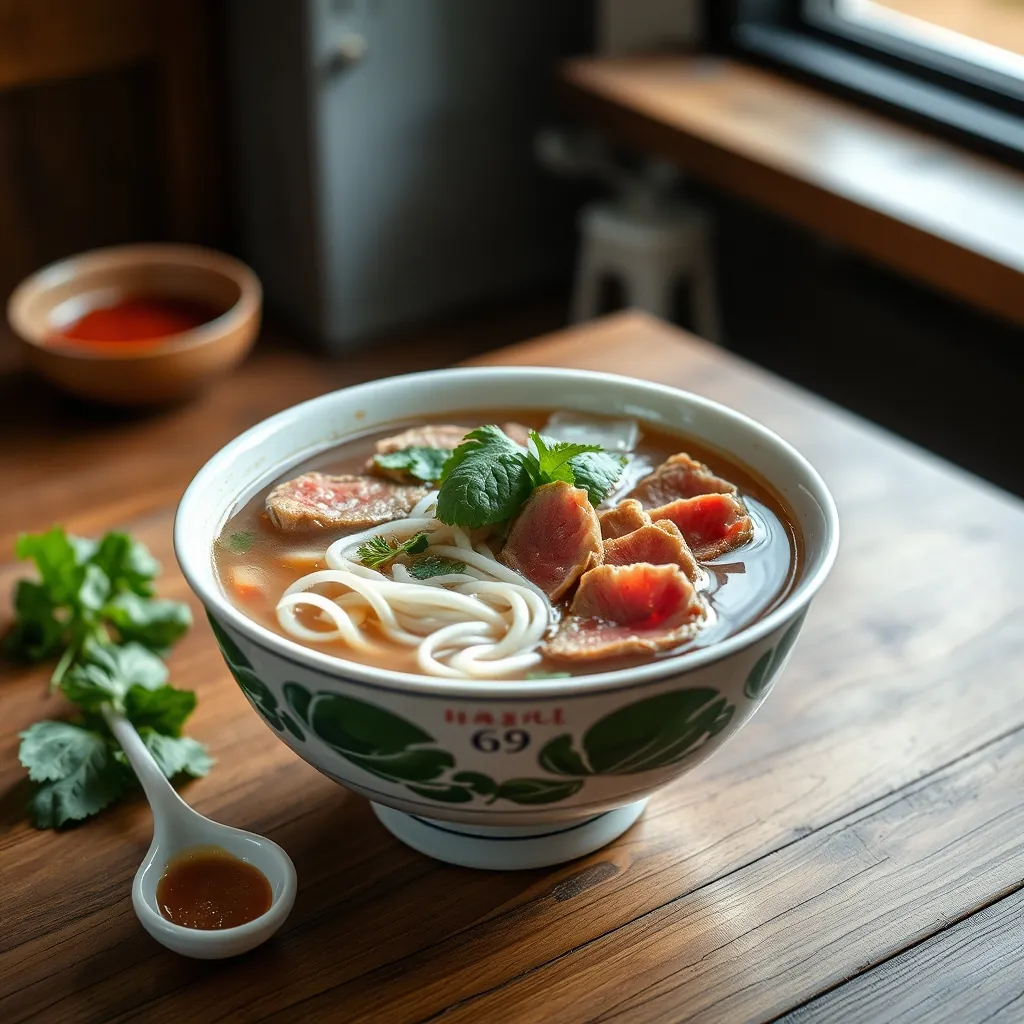
Pho is more than a soup. It is the national dish of Vietnam, a bowl of comfort that defines the country’s culinary identity. This simple yet profound noodle soup consists of a fragrant broth, rice noodles called banh pho, and either beef or chicken. The magic lies in the broth, which is simmered for hours with beef bones, charred onion, ginger, and spices like star anise, cinnamon, and cloves.
The story of pho begins in northern Vietnam in the early 20th century. It emerged in Nam Dinh province and Hanoi around the 1900s, likely influenced by French colonial tastes for beef and the Chinese preference for noodles. The name itself may derive from the French “pot-au-feu,” a slow-cooked beef stew. Over decades, pho migrated south with Vietnamese refugees after 1954, evolving into regional variations. Southern pho often includes more herbs, bean sprouts, and a sweeter broth. Northern pho keeps it cleaner, relying on the purity of the broth and a few key garnishes.
Pho occupies a sacred place in Vietnamese daily life. It is the quintessential breakfast food, served from dawn until late morning by street vendors across the country. Vietnamese people eat pho for breakfast or lunch, rarely for dinner. The morning bowl sets the tone for the day. It is a ritual, a moment of quiet before the city’s chaos begins. Families gather at their local pho stall, slurping noodles in companionable silence. The dish represents warmth, nourishment, and home.
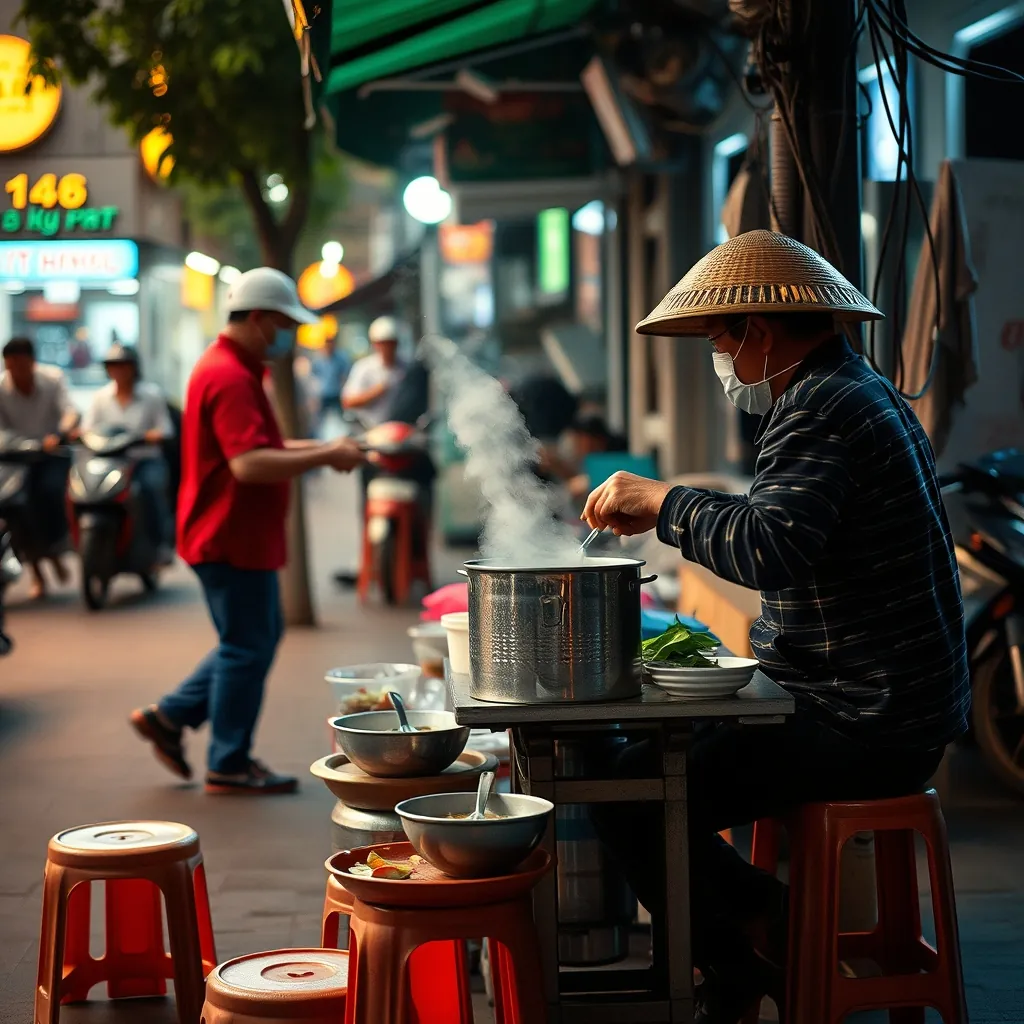
The best time to eat pho is between 6:00 AM and 10:00 AM. This is when the broth is freshest, having been simmered overnight. Street vendors serve it from large metal pots balanced on carts, the steam carrying the aroma of star anise and beef into the morning air. A bowl of pho from a street stall costs between 30,000 and 60,000 Vietnamese dong (roughly $1.25 to $2.50 USD). Restaurant versions in tourist areas or upscale establishments can reach 80,000 to 120,000 dong.
Finding authentic pho requires one reliable strategy: look for the crowd. A stall or shop packed with locals at 7:00 AM is a guarantee of quality. Avoid empty restaurants with English menus and laminated photos. The best pho spots have no frills. They have plastic stools, metal bowls, and a single choice of beef or chicken. The broth should be clear, not cloudy, with a deep amber color. It should taste rich and savory, not salty or greasy. The noodles should be soft but firm, and the meat tender.
For vegetarians, pho chay offers a satisfying alternative. This version replaces beef bones with mushrooms, tofu, and vegetable stock. The broth is lighter but still aromatic, using the same spice blend of star anise and ginger. Many Buddhist vegetarian restaurants in Vietnam serve excellent pho chay, especially on the first and fifteenth days of the lunar month. Look for signs that say “pho chay” or “quan chay” (vegetarian restaurant). The price is similar to meat-based pho, typically 30,000 to 50,000 dong.
2. Banh Mi – A French-Vietnamese Fusion
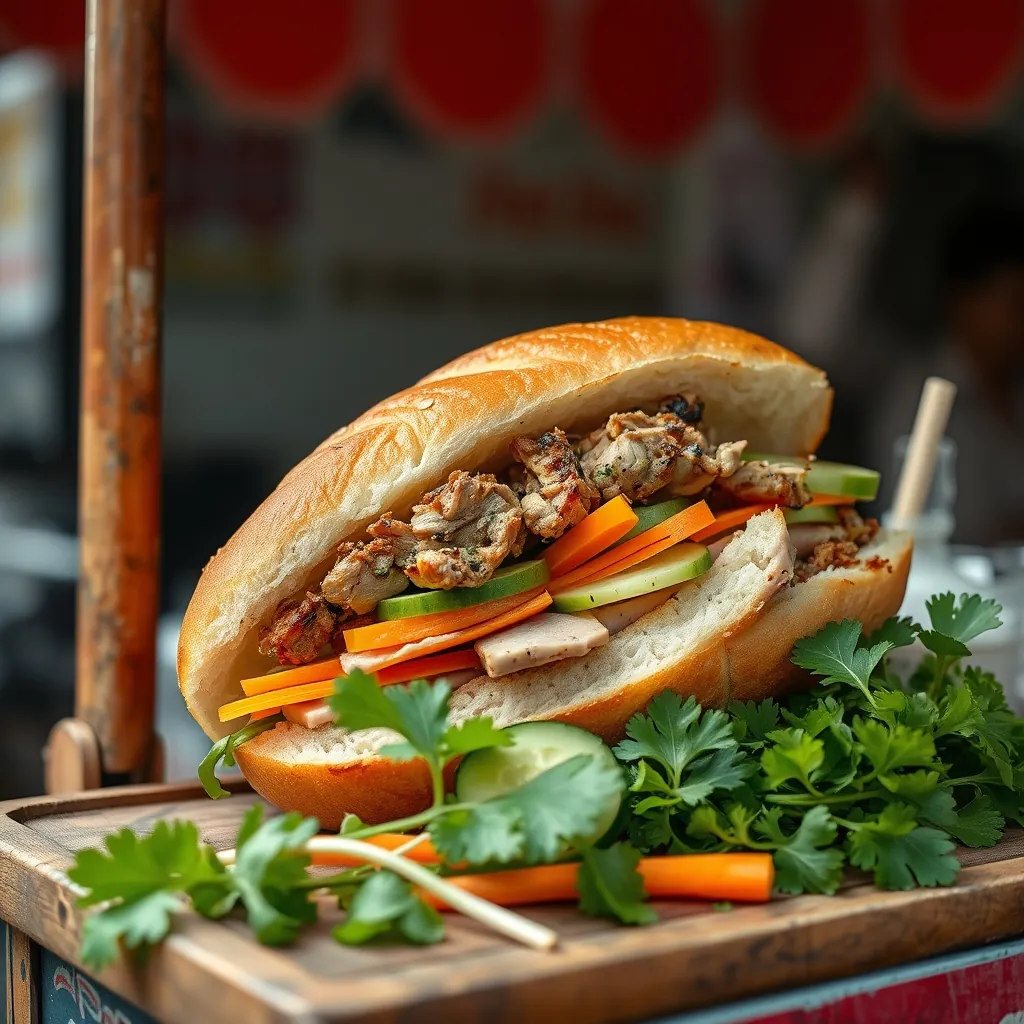
Banh mi is the most visible symbol of Vietnam’s colonial history transformed into something uniquely its own. This sandwich takes a French baguette and fills it with distinctly Vietnamese ingredients. The result is a handheld meal that balances acidity, saltiness, richness, and heat in every bite.
The French introduced baguettes to Vietnam in the late 19th century. Vietnamese cooks adapted the bread to local tastes, using a blend of wheat and rice flour to create a lighter, airier loaf with a paper-thin, shatteringly crisp crust. After the French departure in 1954, the sandwich evolved further. Street vendors in Saigon began stuffing the bread with grilled pork, Vietnamese pork sausage called cha lua, pate, and head cheese. They added pickled carrots and daikon, fresh cucumber slices, cilantro sprigs, and a smear of mayonnaise and soy sauce. The modern banh mi was born.
Unlike pho, banh mi has no specific time of day. It works for breakfast, lunch, dinner, or a late-night snack. Locals often grab one for a quick lunch between 11:00 AM and 1:00 PM. The sandwich is portable, cheap, and satisfying. A standard banh mi from a street vendor costs between 15,000 and 30,000 Vietnamese dong (roughly $0.60 to $1.25 USD). Upscale versions in cafes or restaurants can reach 50,000 dong, but the best examples come from the smallest carts.
Quality comes down to three factors: the bread, the fillings, and the balance. The baguette must be warm and crusty, cracking when squeezed. The pate should be rich and smooth, not dry or gritty. The pickled vegetables must provide a sharp tang that cuts through the fatty meats. A great banh mi has all these elements in harmony. A mediocre one feels flat and soggy.
To find the best banh mi, watch the vendor. They should be assembling each sandwich to order, toasting the bread on a small charcoal grill or in a mini oven. Avoid vendors who pre-make sandwiches and let them sit under plastic wrap. The bread loses its crunch within minutes. Look for a cart with a line of locals, especially around lunchtime. The most famous banh mi shop in Vietnam is Banh Mi Huynh Hoa in Ho Chi Minh City, which sells thousands of sandwiches daily and has a permanent queue.
Vegetarians can order banh mi chay. This version replaces meat with grilled tofu, fried egg, or mushroom pate. The pickled vegetables, cilantro, and chili remain the same. Many Buddhist vegetarian stalls sell banh mi chay, particularly in areas with large temple communities. The flavor is lighter but still complex. The price is the same as the meat version, around 15,000 to 30,000 dong.
3. Goi Cuon – Fresh Spring Rolls
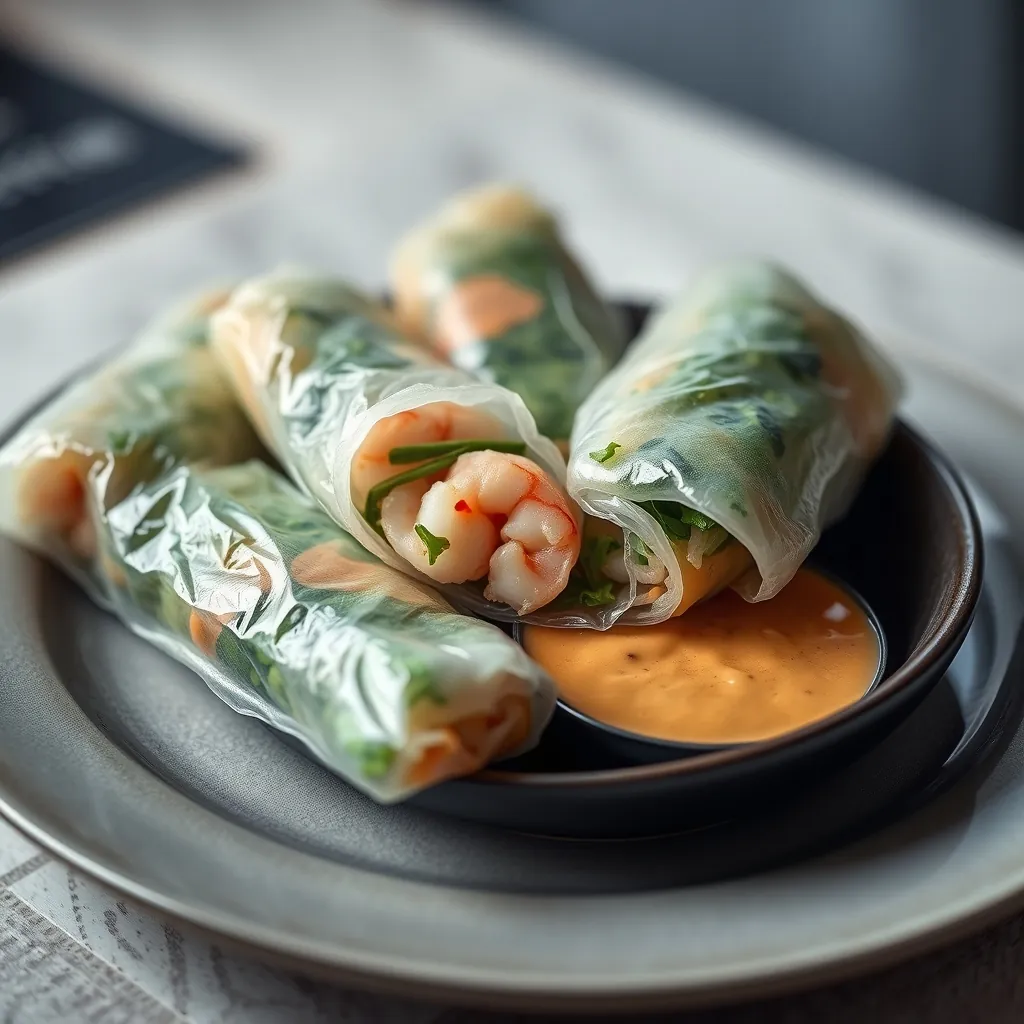
Goi cuon offers a refreshing contrast to Vietnam’s heavier noodle soups and grilled meats. These fresh spring rolls bundle shrimp, herbs, pork, and rice vermicelli inside translucent rice paper. They are served cold or at room temperature, never fried. The name translates to “salad roll,” which captures the light, vegetable-forward character of the dish.
The dish originated in southern Vietnam, where the hot and humid climate favors cool, uncooked preparations. Unlike the fried spring rolls of northern Vietnam (cha gio), goi cuon relies entirely on the freshness of its ingredients. The rice paper wrapper is softened briefly in warm water, then filled and rolled tightly. The result is a clean, bright bundle that showcases the texture of each component.
Goi cuon functions as both an appetizer and a light meal. Locals often order it as a starter before heavier dishes like bun bo Hue or com tam. For a quick lunch, a serving of two to three rolls with dipping sauce provides enough energy without feeling heavy. The best time to eat goi cuon is between 11:00 AM and 2:00 PM, when the herbs are at their freshest and the shrimp has been caught that morning.
A standard serving of two rolls costs between 20,000 and 40,000 Vietnamese dong (roughly $0.80 to $1.60 USD). Street vendors and casual restaurants offer the best value. High-end restaurants may charge 60,000 to 80,000 dong for a more elaborate presentation with premium shrimp or additional garnishes. The price difference is rarely worth it. The street version is just as good, often better, because the rolls are made to order.
The dipping sauce defines the experience. Most vendors serve goi cuon with a thick, sweet hoisin sauce or a peanut-based sauce. The hoisin version includes crushed peanuts, chili, and sometimes a squeeze of lime. The peanut sauce is creamier, with a deeper roasted flavor. Both versions balance the clean taste of the shrimp and herbs. Some restaurants also offer a nuoc cham dipping sauce (fish sauce, lime, sugar, chili), but this is less common for goi cuon specifically.
To judge quality, examine the wrapper. A well-made goi cuon has a tight, even roll with no air pockets. The rice paper should be soft but not mushy, holding its shape without tearing. The shrimp should be visible through the wrapper, arranged neatly on top of the herbs and noodles. The herbs must be fresh and crisp, not wilted or brown. A great goi cuon tastes clean and balanced. A poor one feels soggy, with rubbery shrimp and bland fillings.
Vegetarian versions replace the shrimp and pork with grilled tofu, shiitake mushrooms, or fried tofu skin. The herbs and vermicelli remain the same. Many Buddhist vegetarian restaurants in Ho Chi Minh City and Hoi An serve excellent goi cuon chay. The dipping sauce is often adjusted to be vegan, using mushroom-based hoisin or a tamarind-peanut sauce. The price stays the same as the meat version, around 20,000 to 40,000 dong.
4. Bun Cha – Grilled Pork Noodles
Bun cha is Hanoi’s defining lunch dish. It brings together charcoal-grilled pork patties and slices of pork belly served over a bowl of thin rice noodles, fresh herbs, and a sweet-savory dipping sauce. The dish is a complete meal in one bowl, built around the contrast between smoky grilled meat, cool noodles, and bright herbs.
The dish emerged from Hanoi’s street food culture. Unlike pho, which is eaten throughout the day, bun cha is strictly a lunch food. Locals crowd into small plastic stools around 11:00 AM, when the charcoal grills are at their peak heat. The pork is marinated in fish sauce, sugar, shallots, and garlic before being grilled over hot coals. The charring gives the meat a smoky flavor that defines the dish.
Bun cha gained international attention in 2016 when President Barack Obama ate it with chef Anthony Bourdain at a Hanoi restaurant called Bun Cha Huong Lien. That meal turned a humble street dish into a global symbol of Vietnamese food culture. The restaurant now displays a photo of the two men eating together, and the “Obama Bun Cha” set meal remains on the menu. But the dish was already a beloved staple of Hanoi long before that moment.
A standard serving costs between 30,000 and 50,000 Vietnamese dong (roughly $1.20 to $2.00 USD). Street stalls offer the best value. Restaurant versions may cost 60,000 to 80,000 dong but rarely improve on the street version. The key is the charcoal grill. Gas grills or electric griddles cannot replicate the smoky flavor that comes from cooking over real coals. Look for stalls where you can see the grill smoking. That is the sign of quality.
The dish is assembled at the table. A bowl of nuoc cham (fish sauce, lime, sugar, chili, and vinegar) arrives with the grilled pork floating in it. A separate plate holds a mountain of rice vermicelli noodles. A third plate holds fresh herbs: mint, cilantro, perilla, and lettuce. You take a bite of noodles, dip them in the sauce, and eat them with a piece of grilled pork and a few herbs. There is no fixed order. You build each bite according to your taste.
To judge quality, examine the pork. The patties should be slightly charred on the outside but still moist inside. The pork belly should be tender, not chewy. The sauce should be balanced: sweet from sugar, salty from fish sauce, sour from lime or vinegar, and spicy from fresh chili. The noodles must be soft but separate, not clumped together. The herbs must be fresh and crisp. A great bun cha tastes smoky, sweet, and herbaceous all at once.
Vegetarian versions of bun cha are extremely rare. The dish is built around grilled pork, and the marinade and sauce rely on fish sauce. Some restaurants in Hanoi may offer a mushroom-based alternative, but it is not a common substitute. Vegetarian travelers should look for other dishes on this list, such as goi cuon chay or banh xeo chay, rather than trying to adapt bun cha.
5. Com Tam – Broken Rice
Com tam is the definitive breakfast and lunch dish of southern Vietnam, particularly Saigon. The name translates to “broken rice,” referring to the fractured rice grains that were once considered a low-quality byproduct of the milling process. Today, those broken grains are prized for their ability to absorb marinades and sauces better than whole grains, giving the dish its signature texture and flavor.
The dish emerged from the Mekong Delta’s rice fields. Farmers and laborers needed a filling, affordable meal that could sustain them through long workdays. Broken rice was cheaper than whole grains, so it became the base for a dish that could stretch a family’s food budget. Over time, com tam evolved from a poverty food into a beloved staple of southern Vietnamese cuisine. It is now served everywhere from street stalls to upscale restaurants.
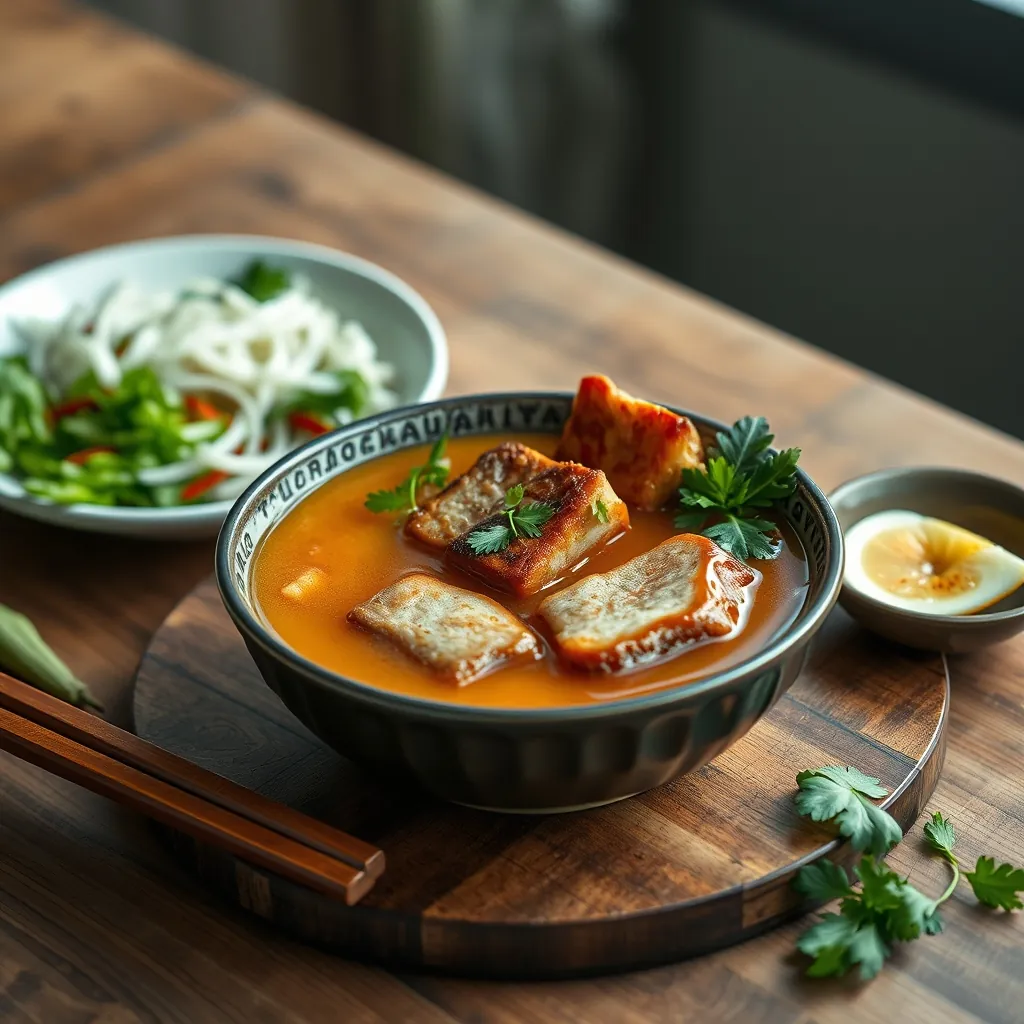
The standard com tam plate includes a bed of broken rice topped with a grilled pork chop (suon nuong), a fried egg, scallion oil, pickled carrots and daikon, sliced cucumber, and a side of fish sauce. The pork chop is the centerpiece. It is marinated in a mixture of fish sauce, sugar, garlic, shallots, and black pepper, then grilled over charcoal until the edges are charred and the interior is juicy. The scallion oil adds richness. The pickles provide acidity and crunch. The fried egg ties everything together with its runny yolk.
Com tam is eaten throughout the day but is most commonly served from early morning until early afternoon. Street stalls start grilling pork by 6:00 AM. The best time to eat com tam is between 7:00 AM and 11:00 AM, when the pork is freshly grilled and the rice is still warm. After noon, many stalls sell out or the quality drops as the pork sits under heat lamps. Look for a stall where you can see the grill in action. The smoke and sizzle are signs of freshness.
A standard serving costs between 25,000 and 45,000 Vietnamese dong (roughly $1.00 to $1.80 USD). This is one of the cheapest meals on this list, making it an excellent choice for budget travelers. Prices are slightly higher in tourist areas of Saigon’s District 1, but the best versions are found in local neighborhoods like District 4, District 5, and Binh Thanh. The price includes everything: rice, pork, egg, pickles, scallion oil, and fish sauce. No extras are needed.
To judge quality, start with the pork chop. It should be thin, about half a centimeter thick, so the marinade penetrates deeply and the meat cooks quickly. The edges should be charred but not burnt. The meat should be tender enough to cut with the edge of a spoon. The rice should be fluffy and separate, not sticky or clumpy. The scallion oil should be fragrant and green, not brown or burnt. The pickles should be crisp and slightly sweet. The fish sauce should be balanced: salty, sweet, and sour with a hint of chili.
Vegetarian versions of com tam are available in Saigon and other southern cities. The pork chop is replaced with tofu or mock meat, often grilled with the same marinade minus the fish sauce. The scallion oil and pickles remain the same. The fried egg can be included or omitted. These versions cost slightly less than the meat version, typically 20,000 to 35,000 dong. Look for vegetarian restaurants or stalls with a “com tam chay” sign. The dish retains its core identity even without the pork, thanks to the broken rice, scallion oil, and pickles that define the com tam experience.
6. Bun Bo Hue – Spicy Beef Noodle Soup
Bun bo Hue is the bold, spicy counterpoint to the gentle clarity of pho. This noodle soup comes from Hue, the former imperial capital of Vietnam. It is a dish defined by its assertive flavors: lemongrass, shrimp paste, chili oil, and beef. The broth is dark, fragrant, and carries a serious kick. This is not a subtle soup. It demands attention.
The origins of bun bo Hue are tied to the royal court of the Nguyen dynasty. Hue was the culinary center of Vietnam, where cooks refined dishes for the emperor. Bun bo Hue was a commoner’s dish that absorbed the city’s sophisticated approach to balance and seasoning. The name translates to “beef noodle Hue.” It reflects the city’s pride in its beef cattle, which graze on the grassy plains of central Vietnam. The dish spread throughout the country but remains most authentic in its hometown.
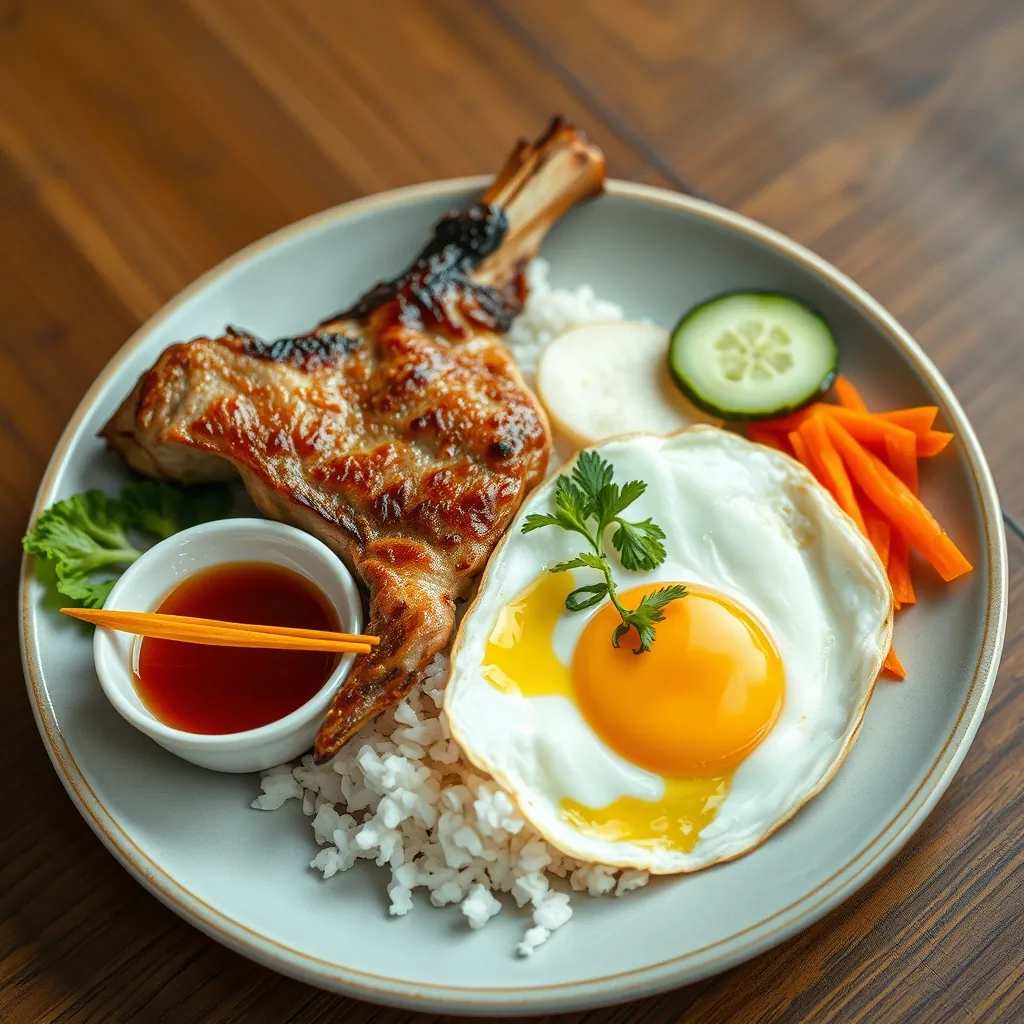
The soup features thick, round rice noodles that are slippery and chewy. The broth is made by simmering beef bones and pork knuckles with lemongrass, shallots, and annatto seeds for color. Shrimp paste (mam tom) is the secret ingredient. It adds a funky, savory depth that cannot be replicated. The beef comes in two forms: thin slices of beef shank and tender chunks of beef brisket. Some bowls also include cubes of congealed pork blood (huyet) and slices of pork sausage (gio). The heat comes from a generous drizzle of chili oil and fresh bird’s eye chilies.
Bun bo Hue is best eaten for breakfast or lunch. In Hue, locals start their day with a steaming bowl by 7:00 AM. The broth is at its peak freshness in the morning, when the bones have been simmered overnight and the flavors are fully developed. Many stalls close by early afternoon, so plan accordingly. The dish is served with a plate of fresh herbs: mint, basil, cilantro, and banana blossom. Bean sprouts, lime wedges, and sliced chilies are also provided. The herbs are not optional. They cut through the richness of the broth and add freshness.
A bowl of bun bo Hue costs between 30,000 and 55,000 Vietnamese dong (roughly $1.20 to $2.20 USD). Prices are higher in tourist areas but remain affordable. The best versions are found in Hue itself, where the dish originated. Look for stalls in the city’s central market or along the streets of the old quarter. In Hanoi and Saigon, bun bo Hue is widely available but often adapted to local tastes. The broth tends to be milder and sweeter outside of Hue. If you want the real thing, find a Hue restaurant.
To judge quality, start with the broth. It should be dark reddish-brown from the annatto seeds and chili oil. The surface should have a thin layer of oil, but not be greasy. The flavor should be savory, slightly spicy, and deeply aromatic from the lemongrass. The noodles should be thick and springy, not mushy. The beef should be tender and sliced against the grain. The pork blood, if included, should be firm and bouncy. The herbs should be fresh and plentiful. The chili oil should be added to taste, not overwhelming the other flavors.
Vegetarian versions of bun bo Hue are rare. The broth relies on beef bones and shrimp paste for its core flavor. Replicating that depth with vegetables is difficult. Some vegetarian restaurants in Hue and Saigon offer a version made with mushroom broth and tofu, but it lacks the characteristic funk of the original. If you are vegetarian, you may need to skip this dish or accept a less authentic version. The dish is defined by its beef and shrimp paste, and no substitute fully captures its essence.
7. Cao Lau – Hoi An’s Signature Noodles
Cao lau is a noodle dish that exists nowhere else in Vietnam. It belongs exclusively to Hoi An, the ancient trading port on the central coast. The dish is a physical expression of the city’s history. Its thick, chewy noodles, smoky pork, and crunchy croutons reflect the influences of Chinese, Japanese, and Vietnamese traders who passed through Hoi An for centuries. But the secret to cao lau is not in the ingredients alone. It is in the water.
The origin of cao lau is tied to Hoi An’s role as a major trading hub from the 16th to the 19th centuries. Chinese merchants brought noodles and soy sauce. Japanese traders contributed techniques for grilling and preserving meat. The Vietnamese added fresh herbs and local vegetables. Over time, these elements fused into a single dish that became the city’s culinary signature. The name “cao lau” refers to the tall shelves (cao) in Chinese-style restaurants where the noodles were stored. It is a dish that tells the story of cultural exchange through every bite.
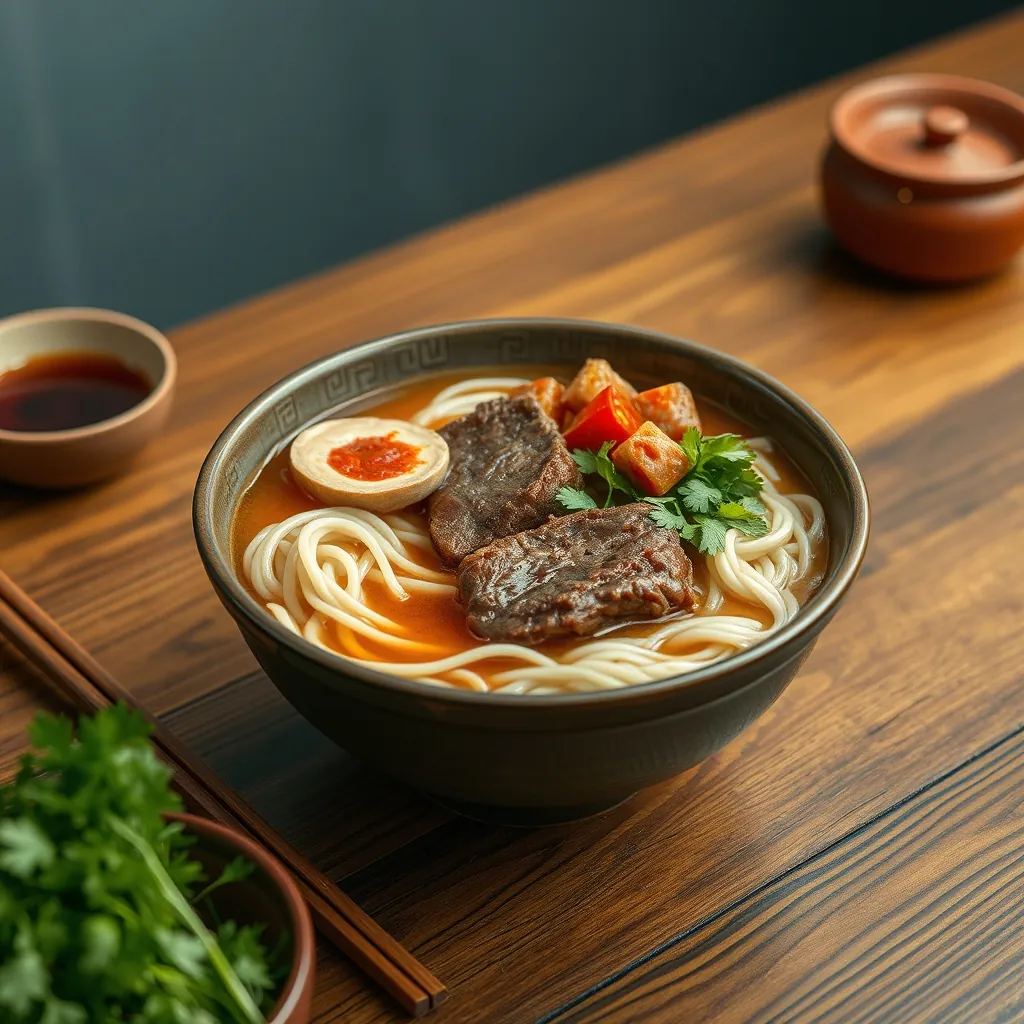
The noodles are the defining feature of cao lau. They are thick, roughly square in cross-section, and have a dense, chewy texture that is closer to udon than to typical rice noodles. The noodles are made from rice flour and water, but the water must come from the Ba Le well, a specific ancient well in Hoi An. The well water has a unique mineral content that gives the noodles their distinctive color and texture. Noodles made with water from outside Hoi An simply do not taste the same. This is why cao lau cannot be replicated elsewhere. The dish is tied to its geography.
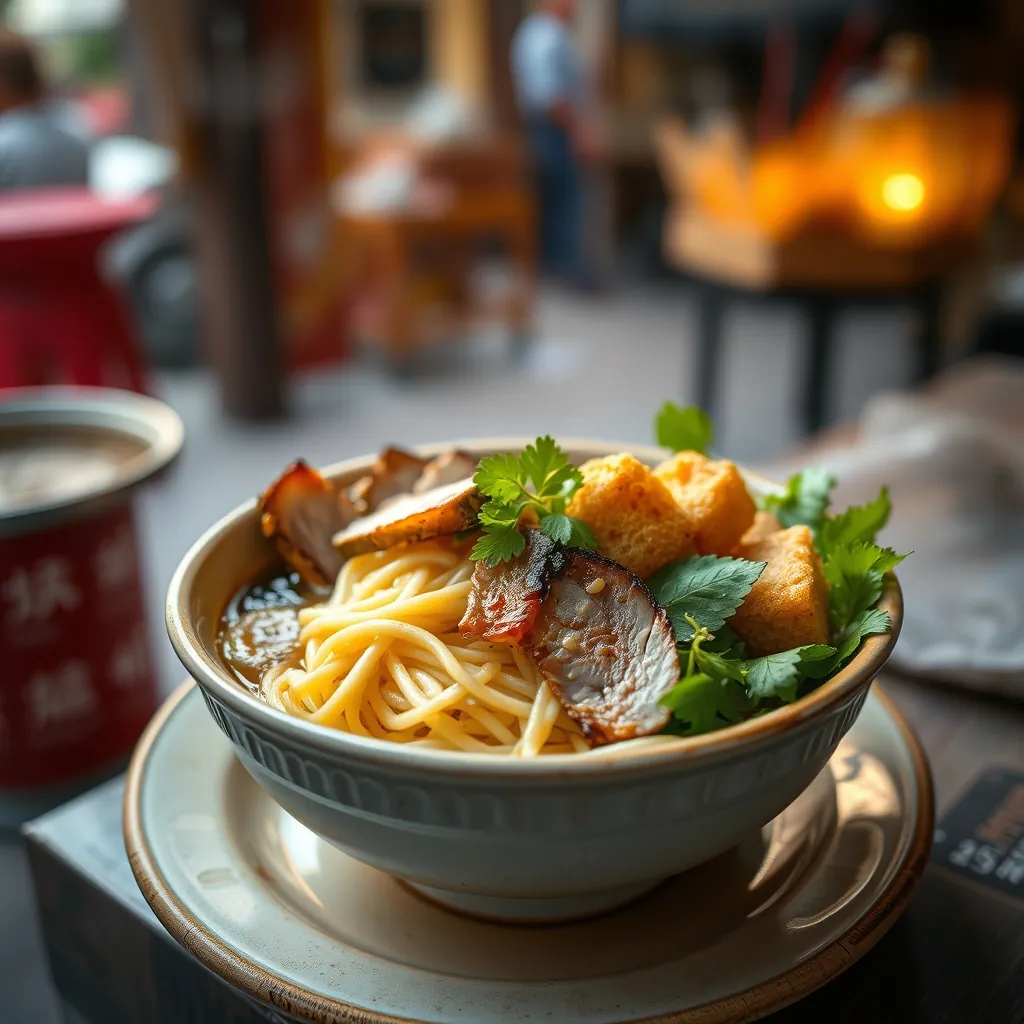
The toppings are simple but carefully prepared. Thin slices of pork shoulder are marinated in soy sauce, garlic, and five-spice powder, then grilled over charcoal until smoky and caramelized. The pork is sliced thin and arranged over the noodles. A handful of fresh greens is added: lettuce, mint, basil, and bean sprouts. The greens are not cooked. They provide a cool, crisp contrast to the warm noodles and meat. The dish is finished with a handful of crispy croutons made from fried rice paper or bread. These croutons add texture and soak up the small amount of broth that is poured over the top.
The broth is minimal. It is not a soup. The noodles are served dry, with just a few tablespoons of a light, savory broth made from pork bones and soy sauce. The broth is poured over the noodles at the last moment, so it coats the noodles without drowning them. The dish is meant to be eaten with chopsticks and a spoon, but the spoon is for the broth, not for drinking. You mix everything together: noodles, pork, greens, croutons, and broth. Each bite should contain a bit of everything.
Cao lau is best eaten for lunch. The dish is heavy and satisfying, but not so heavy that it will slow you down for the rest of the day. In Hoi An, locals eat cao lau between 11:00 AM and 1:00 PM, when the grilled pork is at its freshest and the herbs are still crisp from the morning market. Many cao lau stalls close by early afternoon, so plan your meal accordingly. The dish is served with a small bowl of chili oil and a wedge of lime. Add both to taste. The chili oil adds heat, and the lime brightens the flavors.
A bowl of cao lau costs between 25,000 and 40,000 Vietnamese dong (roughly $1.00 to $1.60 USD). It is one of the most affordable dishes in Vietnam, even by local standards. The best versions are found in Hoi An’s old town, particularly along Tran Phu Street and near the Japanese Covered Bridge. Look for stalls that have a large pot of broth simmering on the stove and a grill with pork sizzling over charcoal. The smell of smoky pork is the best indicator of quality. If the stall does not have a charcoal grill, find another one.
To judge quality, start with the noodles. They should be thick, chewy, and slightly yellow from the well water. The noodles should not be mushy or sticky. They should hold their shape and have a pleasant resistance when bitten. The pork should be smoky and caramelized, not dry or bland. The croutons should be crispy, not stale. The greens should be fresh and plentiful. The broth should be light and savory, not salty or greasy. The balance of textures is the key. A good bowl of cao lau has soft noodles, tender pork, crunchy croutons, and crisp greens all in one bite.
Vegetarian versions of cao lau are not common. The dish relies on grilled pork for its smoky flavor and the pork bone broth for its savory base. Some vegetarian restaurants in Hoi An offer a version with tofu and mushroom broth, but it lacks the essential character of the original. The noodles and croutons are the same, but the pork and broth are irreplaceable. If you are vegetarian, you may need to skip this dish or accept a less authentic version. The dish is defined by its pork, and no substitute fully captures its essence.
8. Banh Xeo – Vietnamese Crispy Crepe
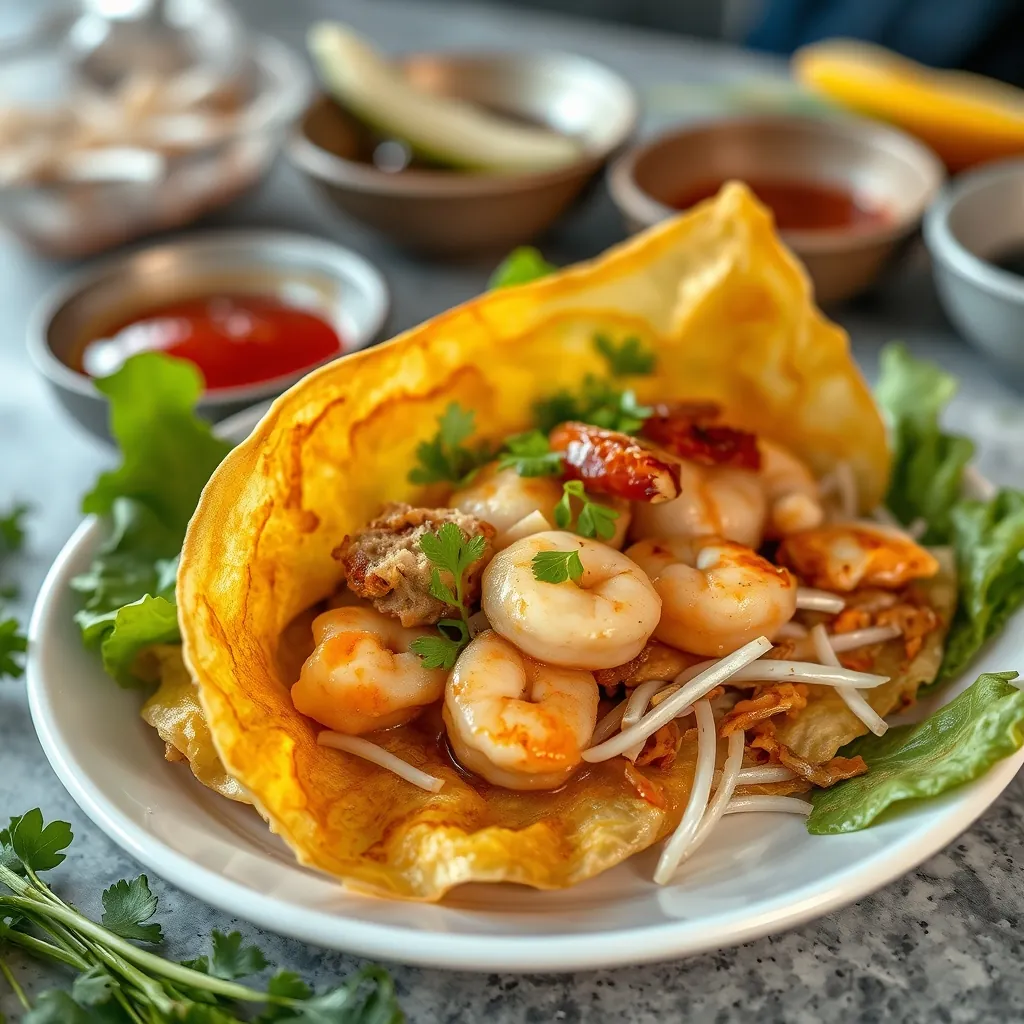
Banh xeo is a sizzling crepe that announces its arrival before it reaches your table. The name translates to “sizzling cake,” a direct reference to the sound the batter makes when it hits a hot, oiled pan. The crepe is thin, crispy, and golden yellow from turmeric. It is folded in half around a filling of shrimp, pork, and bean sprouts. Banh xeo is a dish built on contrast: crispy exterior against tender filling, cool herbs against hot crepe, and savory filling against sweet-sour dipping sauce.
The dish originated in central and southern Vietnam, where rice paddies and shrimp farms provided the core ingredients. The crepe batter is made from rice flour, coconut milk, and turmeric. The coconut milk gives the crepe its richness and helps it crisp up when fried. The turmeric provides the yellow color and a subtle earthy flavor. The batter is thin enough to spread across the pan in a wide circle, creating a crepe that is lacy and delicate at the edges. The filling is simple: fresh shrimp, thinly sliced pork belly, and a handful of bean sprouts. The crepe is cooked quickly over high heat, so the shrimp and pork are just cooked through and the bean sprouts remain crunchy.
The best time to eat banh xeo is lunch or dinner. It is a substantial dish that works well as a main course. In southern Vietnam, banh xeo is often eaten for lunch between 11:00 AM and 1:00 PM. In central Vietnam, it is more common as a dinner dish, served from 5:00 PM onward. The crepe is best eaten immediately after it comes out of the pan. It loses its crispness within minutes, so do not wait. Eat it as soon as it arrives at your table.
The proper way to eat banh xeo involves a two-step process. First, tear off a piece of the crepe with your chopsticks. Place it on a piece of lettuce or a mustard leaf. Add a few sprigs of mint, basil, and perilla. Wrap the lettuce around the crepe to form a tight bundle. Second, dip the bundle into a small bowl of nuoc cham, the universal Vietnamese dipping sauce made from fish sauce, lime juice, sugar, garlic, and chili. The combination is explosive: the crispy crepe, the savory filling, the fresh herbs, and the sweet-sour-salty dipping sauce all hit your palate at once. Do not skip the lettuce wrap. It adds freshness and prevents the crepe from feeling greasy.
A single banh xeo costs between 20,000 and 40,000 Vietnamese dong (roughly $0.80 to $1.60 USD). Portions vary by region. In the south, banh xeo is typically larger, often the size of a dinner plate. In central Vietnam, the crepes are smaller and thicker, sometimes called banh xeo toc tien (fairy hair crepe) because of their lacy texture. Either version is worth trying. The price is the same regardless of size.
To judge quality, look at the crepe first. It should be thin, crispy, and golden yellow. The edges should be lacy and slightly burnt. The crepe should not be thick, doughy, or greasy. The filling should be generous but not overwhelming. The shrimp should be whole and pink. The pork should be thinly sliced and tender. The bean sprouts should be crunchy, not wilted. The accompanying herbs should be fresh and plentiful. The nuoc cham should be balanced: not too salty, not too sweet, with a noticeable kick of chili and garlic. A good banh xeo is all about the texture of the crepe and the freshness of the accompaniments.
Vegetarian versions of banh xeo are widely available. The crepe batter is naturally vegetarian since it is made from rice flour, coconut milk, and turmeric. The filling can be replaced with mushrooms, tofu, and extra bean sprouts. Shitake mushrooms provide a meaty texture. Firm tofu adds protein. The nuoc cham can be made with soy sauce instead of fish sauce to keep the dish fully vegetarian. Many restaurants in tourist areas and vegetarian-friendly cities like Hoi An and Ho Chi Minh City offer banh xeo chay (vegetarian banh xeo) as a standard menu item. The dish retains its essential character even without the meat.
Banh xeo is a hands-on eating experience. There is no elegant way to eat it. You will get fish sauce on your fingers and herb leaves stuck to your chin. This is normal. Embrace the mess. The dish is meant to be shared, eaten quickly, and enjoyed with cold beer or iced tea. It is a social dish, best eaten with friends or family. In Vietnam, banh xeo is often served at casual gatherings and street-side restaurants. The sizzle of the crepe hitting the pan is the soundtrack of a good meal.
9. Cha Ca – Turmeric Fish with Dill
Cha ca is a Hanoi specialty that demands attention. The dish consists of fish fillets marinated in turmeric and fish sauce, then pan-fried at the table with fresh dill and spring onions. It is served with rice noodles, roasted peanuts, fresh herbs, and a dipping sauce made from shrimp paste, lime juice, and chili. The combination is unlike any other Vietnamese dish: the fish is tender and fragrant, the dill adds an herbal punch, and the peanuts provide crunch. Cha ca is not subtle. It is bold, aromatic, and deeply satisfying.
The dish traces its origins to a single street in Hanoi: Cha Ca La Vong. The street is named after the restaurant that invented the dish over a century ago. The Doan family began serving cha ca in the 1870s, and the recipe has remained largely unchanged since then. The restaurant, now called Cha Ca La Vong, occupies a narrow building on the street that now bears the dish’s name. Locals and tourists alike make the pilgrimage to this address to eat the original version. The restaurant serves only one dish: cha ca. That is all it has ever served. The focus and consistency are remarkable.
The fish used in cha ca is typically catfish or snakehead fish. The fillets are cut into pieces, then marinated in a mixture of turmeric, fish sauce, garlic, and ginger. The turmeric gives the fish a bright yellow color and a warm, earthy flavor. The fish sauce provides saltiness and umami. The marinade penetrates the fish for at least 30 minutes, sometimes longer. The fish is then pan-fried in a shallow pan with plenty of oil. Fresh dill and spring onions are added in generous quantities during the last minute of cooking. The dill wilts slightly but retains its distinctive flavor. The spring onions soften and sweeten.
The best time to eat cha ca is lunch or dinner. In Hanoi, cha ca is primarily a lunch dish, served between 11:00 AM and 2:
Leave a Reply