Your cart is currently empty!
Best Vietnamese Food Guide: 10 Must-Try Dishes
Introduction: Why Vietnamese Food is a Global Sensation
Vietnamese cuisine has captured the world’s attention. From bustling street stalls in Hanoi to high-end restaurants in Paris and New York, the appeal is undeniable. The secret lies in a masterful balance of five fundamental flavors: sweet, sour, salty, bitter, and umami. Fresh herbs and vegetables dominate every plate. Meals feel light yet deeply satisfying.
Vietnam’s street food culture drives this culinary revolution. Over 90% of locals eat street food at least once a week. This daily ritual produces dishes refined through generations. The French left their mark with baguettes and pâté, creating the iconic banh mi. Chinese traders influenced noodle soups. The result is a cuisine that feels both exotic and familiar.
This guide moves beyond a simple list of dishes. You will learn the regional variations that define each plate. Understand the best time of day to eat pho versus bun cha. Discover the cultural etiquette behind each meal. Find practical tips for ordering like a local. We cover dietary adaptations for vegetarians, vegans, and those avoiding gluten. By the end, you will navigate Vietnam’s food scene with confidence and curiosity.
Pho: The National Noodle Soup
Pho is Vietnam’s culinary ambassador. This noodle soup defines the country’s food culture. A proper bowl contains rich broth, flat rice noodles, fresh herbs, and thinly sliced meat. The magic happens in the stock. Beef bones char over an open flame before simmering for hours with star anise, cinnamon, cloves, and ginger. The result is a fragrant, amber liquid that forms the soul of the dish.
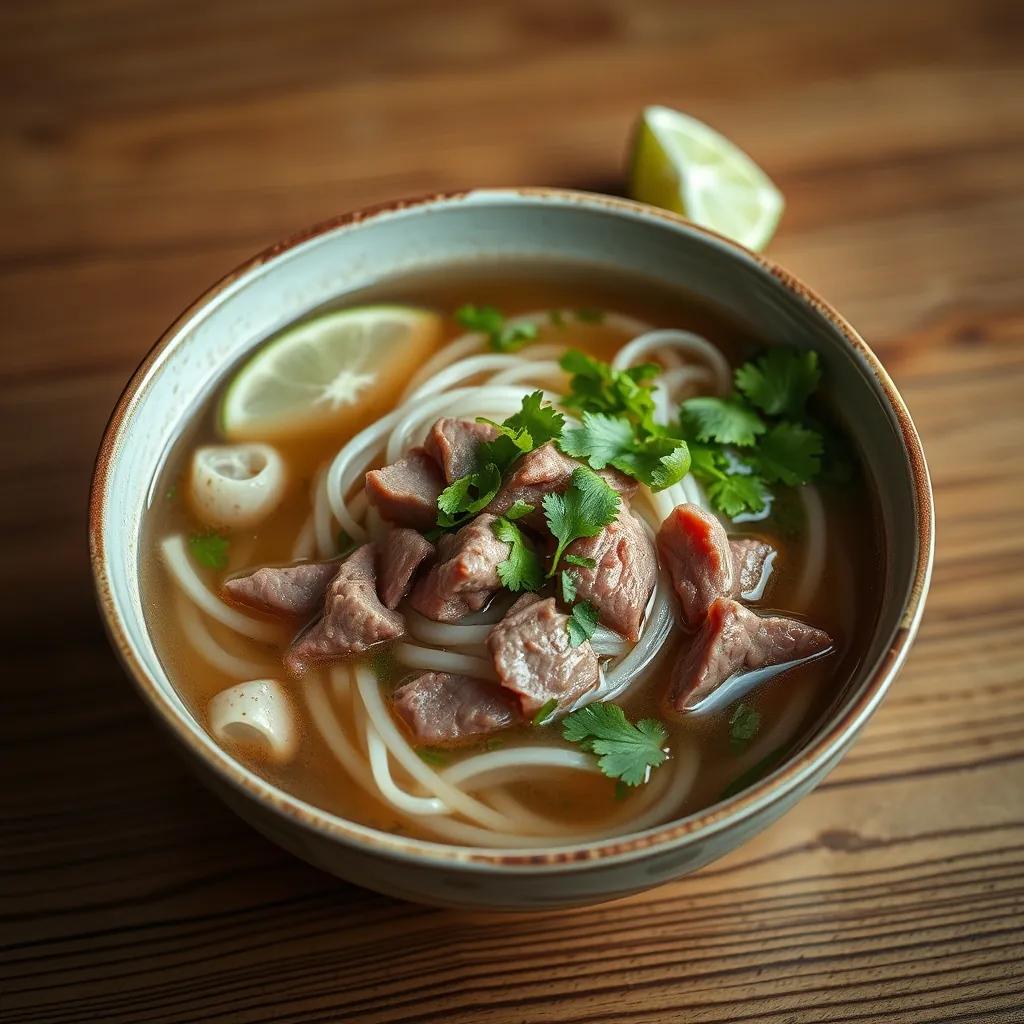
Two distinct regional styles dominate the pho landscape. Northern pho (pho bac) from Hanoi stays true to tradition. The broth is clear and pure. Garnishes remain minimal. You get a simple plate of lime, chili, and a few sprigs of mint. The beef is typically rare slices that cook in the hot broth. Southern pho (pho nam) from Ho Chi Minh City goes bolder. The broth tastes sweeter. The garnish plate overflows with bean sprouts, Thai basil, sawtooth herb, and culantro. Bottles of hoisin sauce and sriracha sit on every table. Locals add them freely to customize the flavor.
Timing matters with pho. Vietnamese people traditionally eat it for breakfast. Street vendors start serving around 5 AM. The light, warming broth prepares the body for the day ahead. You will find pho served at all hours in tourist areas, but the morning experience remains the most authentic.
Eating pho correctly requires a few simple steps. Start by tasting the broth. Add a squeeze of lime for acidity. Drop in fresh chili slices for heat. Pluck mint leaves and tear them into the bowl. Stir in bean sprouts for crunch. If you want a richer flavor, swirl in a small spoonful of hoisin sauce or a dash of sriracha. Do not dump both in at once. Taste as you go. Use chopsticks for the noodles and the spoon for the broth. Lift the bowl to your lips for the last sips. That is how locals finish every bowl.
Banh Mi: The Perfect Fusion Sandwich
Banh mi tells a story of cultural collision. The French brought baguettes during colonial rule. Vietnamese cooks transformed that foreign bread into something entirely their own. The result is a sandwich that balances crisp bread, savory meats, tangy pickles, fresh herbs, and spicy chili in every bite.
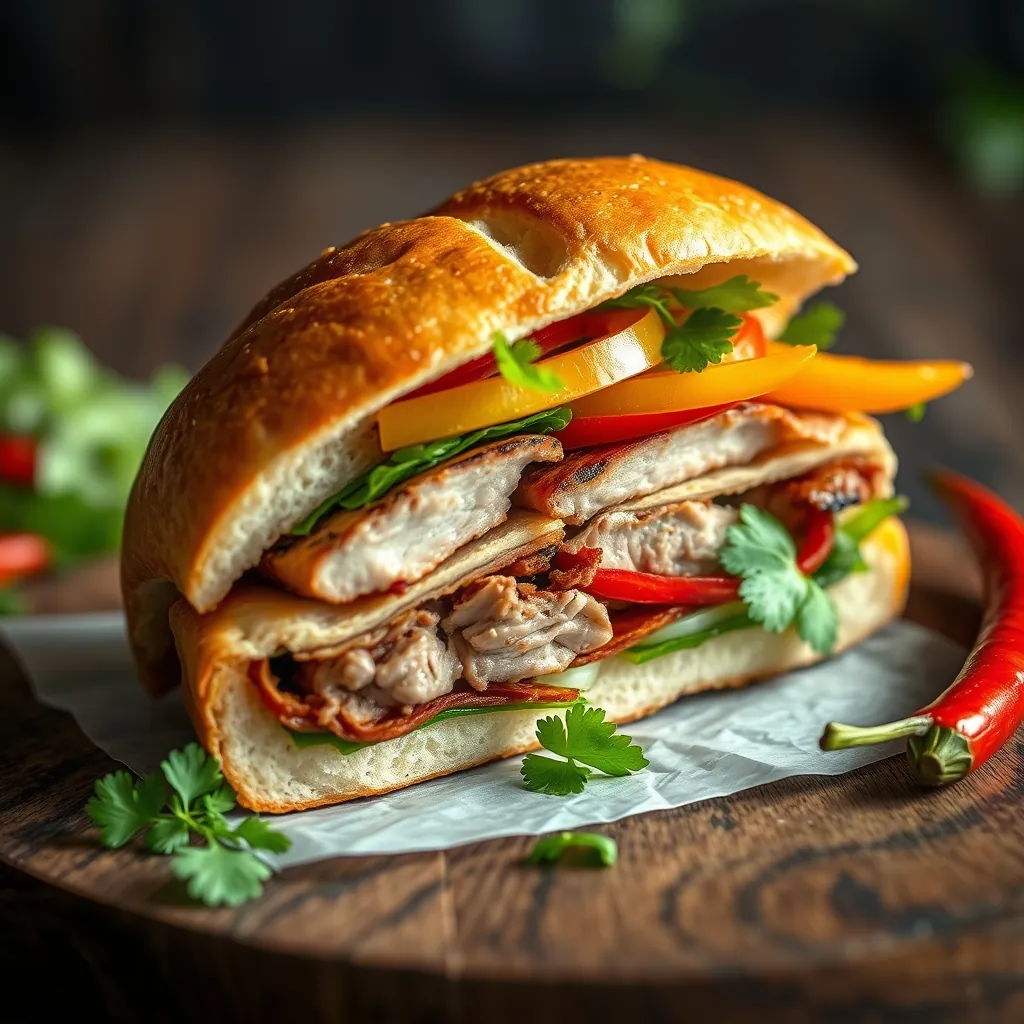
The baguette makes or breaks a banh mi. A proper one has a thin, shatteringly crisp crust and a light, airy interior. Vietnamese bakers achieve this texture by adding rice flour to the dough. The bread gets split lengthwise and toasted over a charcoal grill for extra crunch. The filling goes in while the bread is still warm.
Classic fillings follow a precise formula. A layer of pork liver pate spreads across one side. Mayonnaise or butter goes on the other. Grilled pork shoulder or pork belly provides the main protein. Some versions use shredded pork skin or Vietnamese cold cuts called cha lua. Pickled daikon and carrot add acidity and crunch. Slices of cucumber contribute freshness. Cilantro sprigs and jalapeno slices bring herbal and spicy notes. A drizzle of soy sauce or Maggi seasoning finishes the build.
Regional variations exist across Vietnam. Hoi An claims its own famous version. The bread there uses a slightly different flour blend. The fillings include a special house-made sauce that combines hoisin, soy, and local spices. The meat is often grilled over an open flame rather than fried. Saigon vendors stuff their banh mi with extra ingredients. You might find fried eggs, cheese, sardines, or even avocado added to the standard lineup. Hanoi keeps things simpler with fewer fillings and a stronger focus on the pate and cold cuts.
Ordering banh mi requires a few decisions. Point to the meat you want from the display case. Specify if you want extra chili or less pickles. Ask for it “nong” (hot) to ensure the vendor toasts the bread fresh. Most shops offer a mixed option that includes several types of meat. Do not skip the pate. It adds a rich, savory depth that ties all the ingredients together. Eat the sandwich immediately. A banh mi loses its magic within minutes as the pickles wet the bread and the crust softens.
Bun Cha: Hanoi’s Grilled Pork Delight
Bun cha belongs to Hanoi. This city owns the dish the way Hue owns bun bo. Grilled pork patties and sliced pork belly sit in a warm, sweet-savory fish sauce broth. Rice noodles and a basket of fresh herbs come on the side. You build each bite yourself. The combination of smoky pork, tangy broth, and crisp herbs creates a flavor profile that defines northern Vietnamese cooking.
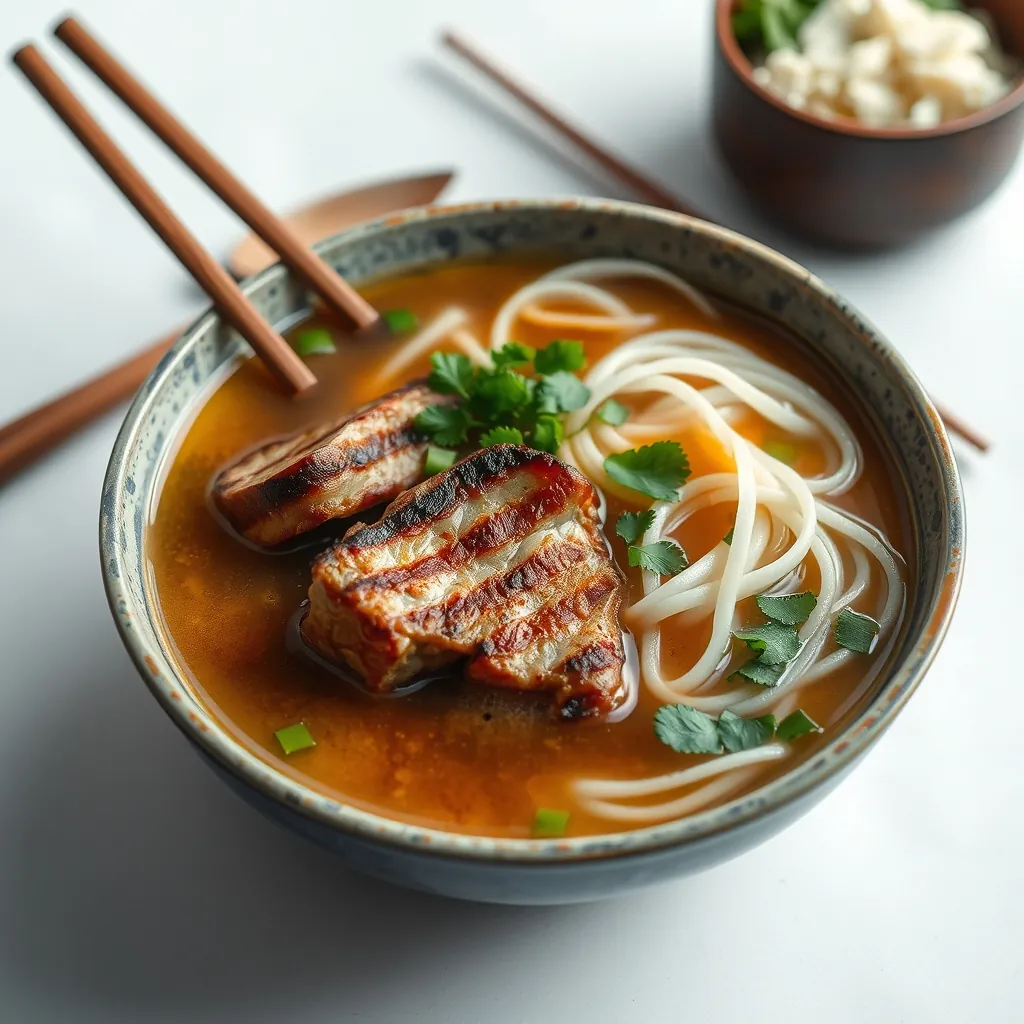
The pork gets its character from the marinade and the grill. Minced pork shoulder forms flat patties. Thin slices of pork belly join them in a mixture of fish sauce, sugar, shallots, garlic, and black pepper. Some cooks add a splash of caramel sauce for deeper color. The meat rests in this marinade for at least an hour. Grilling over hot charcoal gives the pork a smoky char on the outside while keeping the inside juicy. The patties should have slight crispy edges. The belly slices should render some fat without becoming dry.
The broth acts as the dipping sauce and the soup. It starts with a base of warm water mixed with fish sauce, sugar, rice vinegar, and lime juice. Thin slices of green papaya or carrot float in the liquid. The broth stays light and clear. It does not overwhelm the pork. Instead it provides a salty-sour-sweet counterpoint that cuts through the richness of the grilled meat. You taste the fish sauce but it does not dominate.
President Obama put bun cha on the global map. He sat at a plastic table in Hanoi with chef Anthony Bourdain in 2016. They shared a bowl of bun cha at Bun Cha Huong Lien. The restaurant now calls itself “Obama Bun Cha.” A framed photo of the meal hangs on the wall. Locals still crowd the place every lunch hour. The dish did not need celebrity endorsement to thrive. It has been Hanoi’s midday staple for generations.
Eating bun cha follows a specific rhythm. Pick up a portion of rice noodles with your chopsticks. Dip them into the broth. Swirl to coat the noodles. Lift them out and place them in your small bowl. Add a piece of grilled pork from the broth. Grab a handful of herbs. Vietnamese balm, mint, and perilla leaves work best. Dip the whole bundle into the broth again. Eat in one bite. Repeat until the broth is gone. Do not pour the noodles into the broth bowl. That turns the dish into soup. The proper method keeps the noodles separate and the broth concentrated.
Bun cha demands lunchtime consumption. Hanoians eat it between 11 AM and 1 PM. Vendors set up their charcoal grills in the morning. The smoke fills the narrow streets of the Old Quarter. The pork stays hot and fresh through the lunch rush. By 2 PM most shops have sold out. Do not try to find bun cha for dinner. You will be disappointed. Plan your day around this meal. It is worth the schedule adjustment.
Goi Cuon: Fresh Spring Rolls
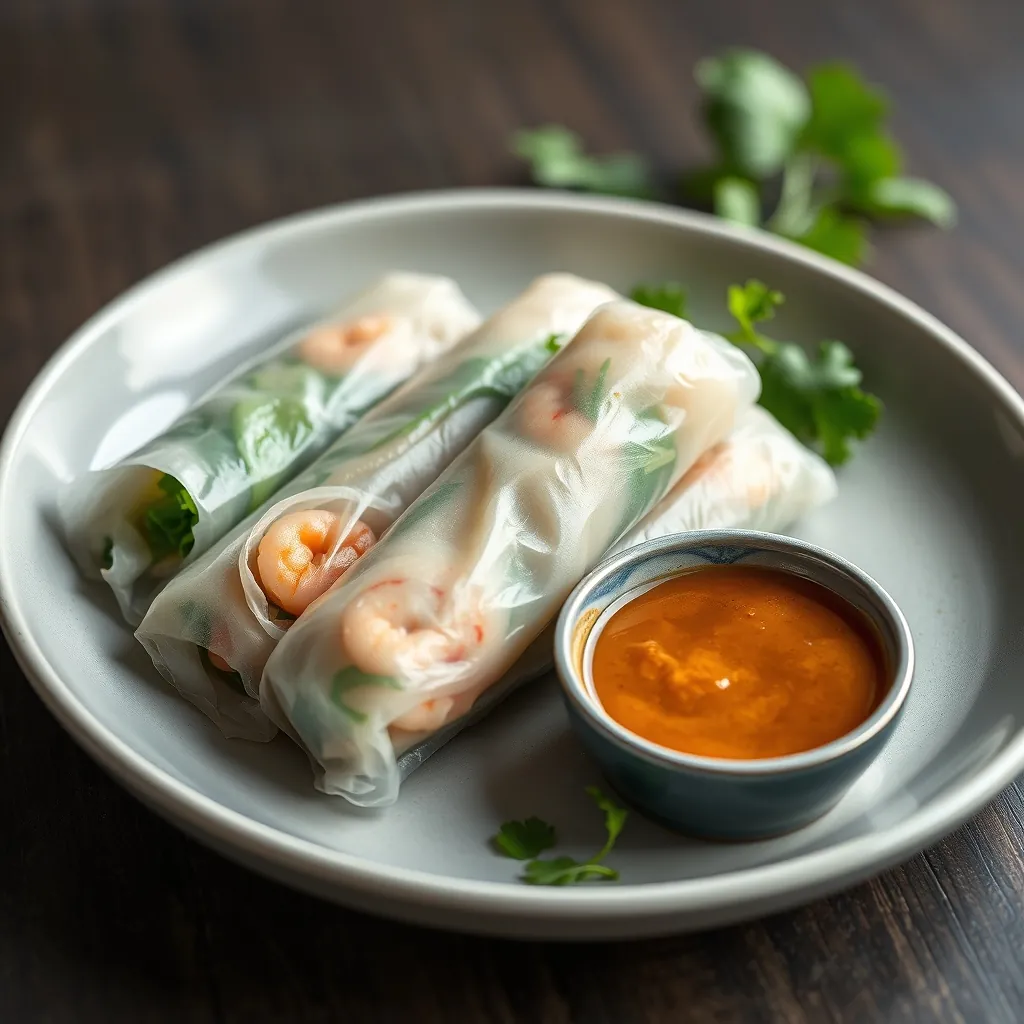
Goi cuon translates to “salad roll.” The name tells you everything about the dish. These are not fried. They are not heavy. Thin rice paper wraps a bundle of shrimp, pork, rice vermicelli, and fresh herbs. You eat them cold or at room temperature. The texture is soft and chewy. The filling stays bright and crunchy. Every bite delivers a contrast between the slippery noodles, the tender meat, and the crisp lettuce.
Do not confuse goi cuon with nem ran or cha gio. The difference is fundamental. Goi cuon are raw and fresh. Nem ran (called cha gio in the south) are deep-fried spring rolls wrapped in wheat or rice paper and filled with minced pork, mushrooms, and glass noodles. The wrapper turns golden and crispy. The filling cooks inside the oil. Goi cuon require no cooking beyond boiling the shrimp and pork. Nem ran require a pot of hot oil. Both appear on Vietnamese tables but they serve different purposes. Goi cuon work as a starter or a light meal. Nem ran appear more often as a side dish or part of a larger spread.
The assembly matters more than the ingredients. Rice paper sheets are brittle when dry. They become pliable when dipped in warm water for a few seconds. Lay the softened sheet flat on a clean surface. Place a leaf of lettuce on the lower third. Add a small handful of vermicelli noodles. Arrange two or three cooked shrimp cut in half lengthwise, pink side down, on top of the noodles. Add a few slices of boiled pork shoulder. Top with fresh herbs. Mint, cilantro, and chives work best. Fold the bottom edge over the filling. Fold in the sides. Roll tightly upward. The rice paper seals itself. The shrimp show through the translucent wrapper on the outside.
The dipping sauce defines the experience. Two options dominate. The first is hoisin peanut sauce. Hoisin sauce mixed with peanut butter, water, and a touch of chili garlic paste creates a thick, sweet, nutty dip. Crushed peanuts on top add crunch. This sauce pairs best with goi cuon that contain shrimp and pork. The second option is nuoc cham. The same fish sauce, lime, sugar, garlic, and chili mixture that accompanies many Vietnamese dishes. This thinner, tangier sauce works better for vegetarian versions or when you want a lighter taste. Some restaurants serve both. Try each. Decide which you prefer.
Eating goi cuon without making a mess requires technique. Dip the roll gently into the sauce. Do not submerge the entire roll. The rice paper softens quickly and tears easily. A quick dip on one side is enough. Lift the roll to your mouth. Eat it in one or two bites. Do not try to bite a piece off and put the rest back on your plate. The filling will fall out. The wrapper will unravel. One roll takes two bites maximum. If you need more, you are eating too slowly. The herbs should stay inside the wrapper. The sauce should stay on the outside. Follow this method and you will keep your hands clean and your plate tidy.
Vegetarian versions exist and they work well. Replace the shrimp and pork with firm tofu. Press the tofu to remove excess water. Slice it into thin rectangles. Pan-fry the tofu in a little oil until golden brown on both sides. Season with a pinch of salt and black pepper. Use the same rice paper, vermicelli, lettuce, and herbs. Add julienned carrots and cucumbers for extra crunch. The hoisin peanut sauce works perfectly with tofu. The sweetness of the sauce complements the mild flavor of the tofu. Many Buddhist vegetarian restaurants in Vietnam serve excellent goi cuon chay. The dish loses nothing in translation. It gains a different kind of satisfaction.
Com Tam: Broken Rice with Grilled Pork
Com tam started as a meal for the poor. Broken rice grains were considered inferior because they shattered during the milling process. Wealthy families discarded them. Workers and farmers bought them cheaply and turned them into something extraordinary. Today com tam is a national staple. It appears on menus across Vietnam and in Vietnamese restaurants worldwide. The broken grains cook faster than whole grains. They absorb marinades and sauces more readily. The texture is softer, fluffier, and more forgiving than standard jasmine rice. What was once a byproduct is now a prized ingredient.
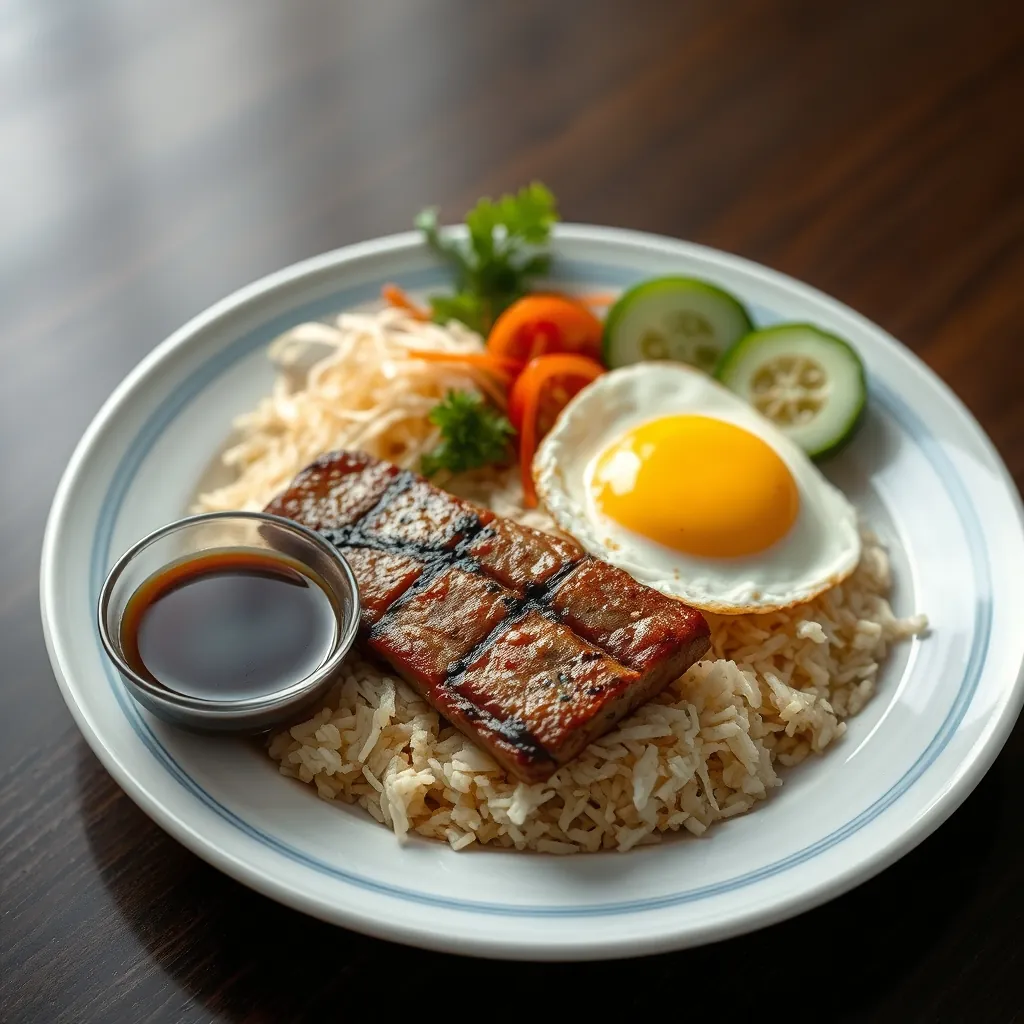
The centerpiece of com tam is the grilled pork chop. Suon nuong requires patience. Pork chops are pounded thin to ensure even cooking. They marinate for hours in a mixture of fish sauce, sugar, garlic, shallots, honey, and black pepper. Some cooks add lemongrass or five-spice powder. The sugar caramelizes on the grill. The edges char slightly. The meat stays juicy inside. The result is a balance of salty, sweet, and smoky flavors that cling to every bite of broken rice.
A proper com tam plate includes several supporting players. Cha trung is a steamed egg meatloaf. Ground pork, glass noodles, wood ear mushrooms, and eggs are mixed together and steamed until firm. The texture is dense and silky. The flavor is mild and savory. Bi is shredded pork skin. Thin strips of cooked pork skin are mixed with toasted rice powder. The rice powder absorbs moisture and keeps the skin from becoming greasy. The combination adds crunch and a nutty flavor to the plate. A fried egg with a runny yolk sits on top. Break the yolk and let it coat the rice. The richness of the egg binds everything together.
The accompanying fish sauce dip is not an afterthought. Nuoc cham for com tam is slightly different from the standard version. It contains more sugar and more garlic. Some cooks add shredded papaya or carrot to the sauce. The sweetness cuts through the richness of the pork and egg. The acidity balances the fat. The chili provides heat. Pour the sauce over the rice and meat. Do not dip. The broken rice grains absorb the sauce quickly. Each forkful delivers the full range of flavors.
Com tam is a lunch and dinner dish. You will not find it on breakfast menus. The meal is too heavy for the morning. Street vendors set up their grills around 10am. The smoke and smell draw customers from blocks away. The busiest hours are between 11am and 1pm. Workers, students, and families pack into plastic chairs on the sidewalk. They eat quickly. They leave satisfied. The dish costs very little. The satisfaction is enormous.
Vegetarian adaptations exist and they work. Replace the pork chop with thick slices of portobello mushroom or firm tofu. Marinate them in the same sweet and savory sauce. Grill them until the edges char and the center stays tender. Replace the egg meatloaf with a steamed tofu and mushroom version. Use the same glass noodles and wood ear mushrooms. Bind them with chickpea flour instead of eggs. The shredded pork skin is harder to replace. Some vegetarian versions skip it entirely. Others use shredded fried tofu skin as a substitute. The texture is different but the crunch remains. The broken rice and the sauce carry the dish regardless of what sits on top. The spirit of com tam survives the adaptation. The broken rice still tells its story of transformation and resilience.
Banh Xeo: Crispy Vietnamese Crepe
The name banh xeo translates to sizzling cake. The sound comes from the batter hitting the hot oiled pan. That sizzle is the first promise of crunch. Banh xeo is a large crepe made from rice flour, turmeric, and coconut milk. The turmeric gives it a bright yellow color. The coconut milk adds richness and a subtle sweetness. The crepe is thin and lacy around the edges. The center holds a filling of shrimp, pork, and bean sprouts. The contrast between the crispy shell and the tender filling is the point of the dish.
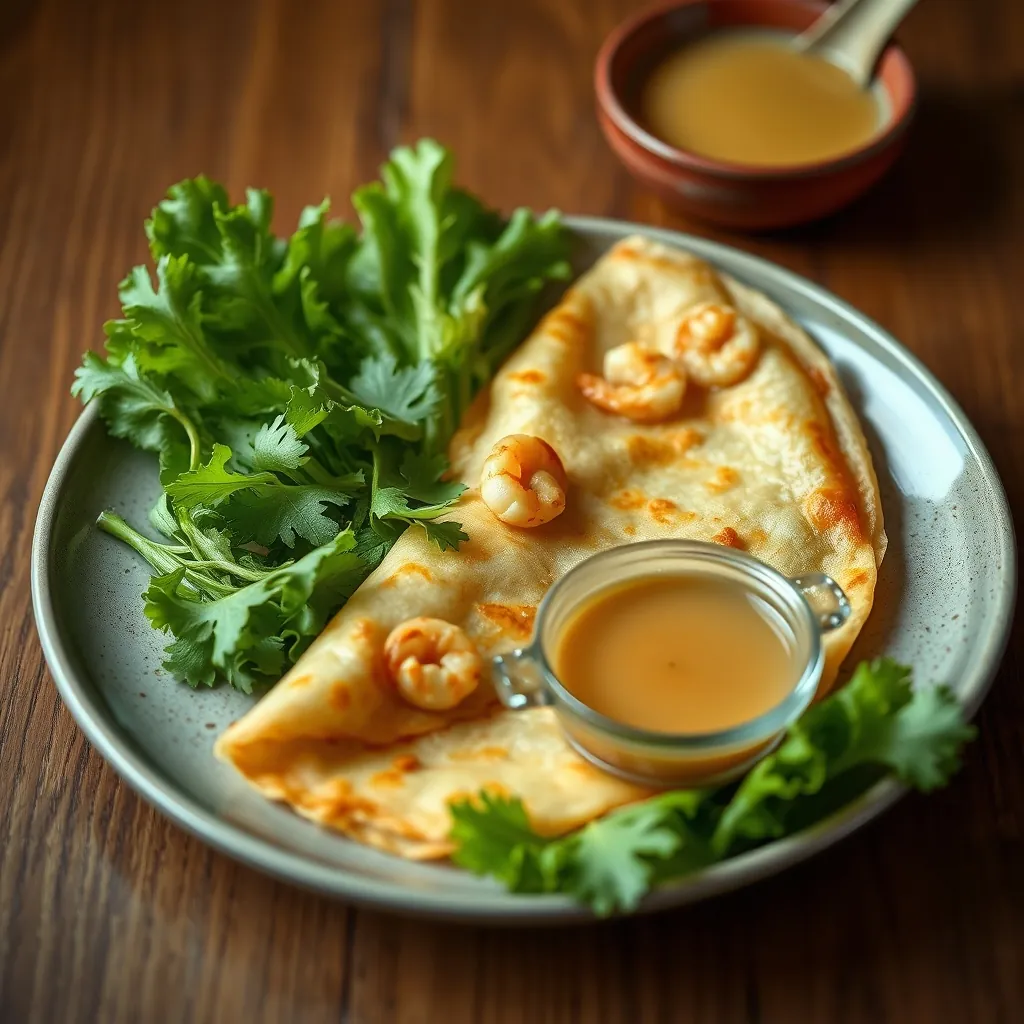
The batter is simple but precise. Rice flour provides the structure. A small amount of cornstarch or tapioca flour adds extra crispness. Coconut milk replaces water. Turmeric provides color and a mild earthy flavor. A pinch of salt and sugar balance the taste. The batter rests for at least thirty minutes before cooking. Resting allows the flour to hydrate fully. The result is a crepe that shatters when you cut into it.
The filling is cooked separately before the crepe is assembled. Pork belly is sliced thin and stir-fried until golden. Shrimp are peeled and halved lengthwise. Bean sprouts are washed and drained. The crepe pan must be very hot. A generous amount of oil coats the bottom. The batter spreads thin across the surface. The pork and shrimp go in first. The bean sprouts go on top. The pan is covered for a minute. The steam cooks the sprouts while the bottom of the crepe crisps. The crepe is folded in half before serving. The inside stays moist. The outside stays shatteringly crisp.
Eating banh xeo requires technique. Do not attack it with a knife and fork. Tear off a piece of the crepe with your chopsticks or your hands. Place it inside a lettuce leaf or a mustard leaf. Mustard leaves are preferred in central Vietnam. They have a slight bitterness that cuts through the richness of the crepe. Add fresh herbs. Mint, cilantro, perilla, and fish mint are common choices. Roll the leaf into a tight bundle. Dip it into nuoc cham. The fish sauce dip provides salt, sweetness, and acidity. The herbs provide freshness. The crepe provides crunch. The bundle should disappear in two bites.
Speed matters with banh xeo. The crepe loses its crispness within minutes of leaving the pan. Steam from the filling softens the shell. Condensation from the plate accelerates the process. Eat the crepe immediately after it arrives. Do not wait for your companions food. Do not take a photograph first. The window of perfect texture is short. A soggy banh xeo is a sad banh xeo. The cook made it for you to eat now. Respect the timing.
Regional variations exist and they matter. Southern banh xeo is large. The crepe spans the diameter of the pan. The filling is generous. The coconut milk content is higher. The crepe is richer and softer. Central banh xeo is smaller. The crepe is smaller than a hand. The batter contains less coconut milk. The crepe is thinner and crispier. The filling is more restrained. Mustard leaves replace lettuce. The dipping sauce in central Vietnam is often made with fermented shrimp paste instead of fish sauce. The flavor is funkier and more intense. Northern banh xeo is less common. It tends to be smaller and less greasy. The filling emphasizes mushrooms and vegetables over meat. Each region defends its version. All of them are worth eating.
A few practical tips improve the experience. Look for banh xeo at street food stalls and casual restaurants. Do not order it at high-end establishments. The dish belongs on plastic tables with paper napkins. Check that the crepe is made to order. Pre-made banh xeo is a warning sign. The crepe should arrive hot and sizzling. The edges should be brown and bubbly. The center should be firm but not wet. If the crepe looks pale or limp, send it back. A good banh xeo is worth the wait. A bad one is not worth the calories.
Bun Bo Hue: Spicy Beef Noodle Soup from Central Vietnam
Hue was the imperial capital of Vietnam. The city’s cuisine reflects that history. Royal dishes are precise and decorative. Bun bo Hue comes from the other side of that tradition. It is street food. It is bold. It is unapologetically spicy. The soup is a deep red-brown color. The flavor hits you in layers. Lemongrass and chili provide the first punch. Fermented shrimp paste adds a funky depth. The broth is rich with beef and pork bones. This is not the delicate, clear broth of pho. Bun bo Hue is aggressive. It demands your attention.
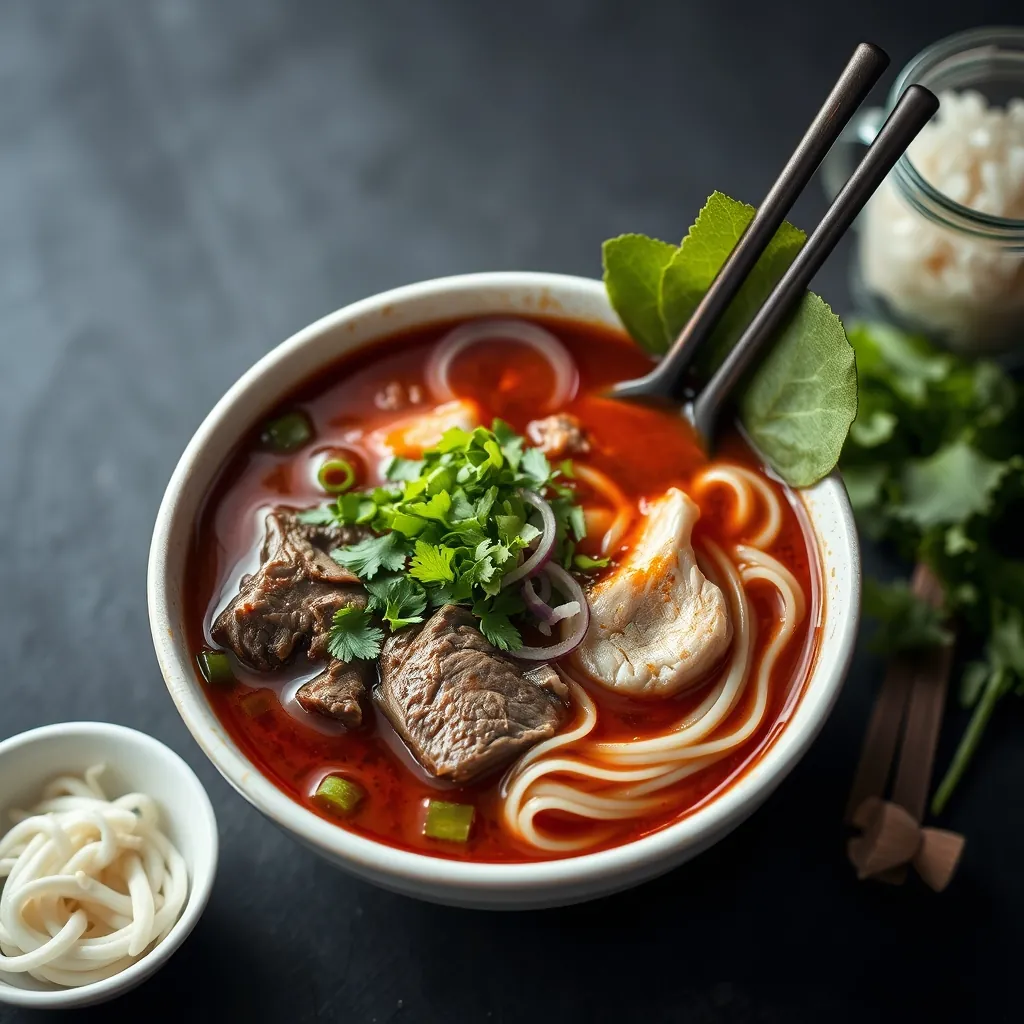
The broth is the foundation. Beef shank and pork hock are the primary bones. They roast first to deepen the flavor. Charred onion and ginger go into the pot. Lemongrass stalks are bruised and added whole. The lemongrass infuses the broth with citrus and floral notes. Chili oil provides heat. Annatto seeds provide color. The broth simmers for hours. The fat renders into the liquid. The collagen from the bones thickens the texture. The result is a broth that coats your tongue. It is spicy but not burning. It is savory but not heavy. The balance is precise.
The meat selection sets bun bo Hue apart. Beef shank is sliced thin against the grain. The meat is tender but retains some chew. Pork hock is cut into rounds with the skin on. The skin provides a gelatinous texture. The fat adds richness. Congealed pork blood is a traditional addition. The blood is steamed into a firm block. It is sliced into cubes. The texture is silky and slightly metallic. It is not for everyone. It is essential for authenticity. Some versions include pork sausage. Cha lua is a common choice. The sausage is mild and bouncy. It provides a contrast to the strong flavors in the broth.
The noodles are different from pho noodles. Bun bo Hue uses thick round rice noodles. They are similar to spaghetti in diameter. The texture is chewy and resilient. The noodles hold up to the heavy broth. They do not become mushy. They absorb the flavor without losing their structure. The noodles are cooked separately and added to the bowl. The broth is ladled over the top. The meat is arranged on the surface. The heat from the broth warms everything through.
The garnish is a critical component. Thinly sliced purple onion provides sharpness. Chopped green onion and cilantro add freshness. A sprinkle of black pepper finishes the bowl. The side plate is just as important. Fresh herbs include mint, cilantro, and basil. Bean sprouts provide crunch. Sliced chili adds extra heat. Lime wedges provide acidity. You add these elements yourself. The balance is personal. Some people want more heat. Some people want more sour. The bowl is a starting point. You finish it.
Bun bo Hue is a lunch or dinner dish. It is too heavy for breakfast. The spice level is too high for the morning. The broth is too rich. Locals eat it between eleven in the morning and two in the afternoon. Dinner service starts around six. The soup is served year-round. It is especially popular in the cooler months. The heat from the chili warms you from the inside. The richness of the broth satisfies a deep hunger.
Ordering bun bo Hue requires some knowledge. The menu may list it as bun bo Hue or bun bo. Some places offer variations. Bun bo gio includes pork hock. Bun bo nam includes beef flank. Bun bo dac biet is the special version with everything. The price reflects the number of ingredients. A basic bowl costs around 30,000 to 50,000 Vietnamese dong. The special version costs more. The extra cost is worth it. You want the full experience.
Eating the soup follows a simple sequence. Add the herbs and bean sprouts first. Squeeze the lime wedge over the top. Stir the soup to distribute the flavors. Taste the broth before adding extra chili. The broth should already have heat. Adding too much chili masks the other flavors. Eat the noodles and meat together. Drink the broth between bites. The broth is the best part. Do not leave it behind. The bowl should be empty when you finish. That is the sign of a good meal.
A few practical tips improve the experience. Look for bun bo Hue at specialized noodle shops. The sign will say bun bo Hue. The shop will smell like lemongrass and chili. The broth should be bubbling in a large pot at the front. The meat should be visible in the pot. The noodles should be cooked to order. Pre-cooked noodles are a warning sign. The soup should arrive steaming hot. The color should be deep red-brown. The oil should glisten on the surface. A good bowl of bun bo Hue is a complete meal. It provides protein, carbohydrates, and vegetables. It satisfies hunger and warms the body. It is a dish that demands respect and rewards attention.
Cao Lau: Hoi An’s Signature Noodle Dish
Hoi An is a town built on trade. Chinese merchants arrived in the 15th century. Japanese traders followed in the 16th century. The architecture reflects that fusion. The food does too. Cao lau is the culinary embodiment of Hoi An’s history. The noodles are thick and chewy. The broth is dark and savory. The dish is topped with sliced pork, fresh herbs, and crispy croutons. It exists nowhere else in Vietnam. The water in Hoi An makes it possible. The dish cannot be replicated outside the town. That is not marketing. That is geology.
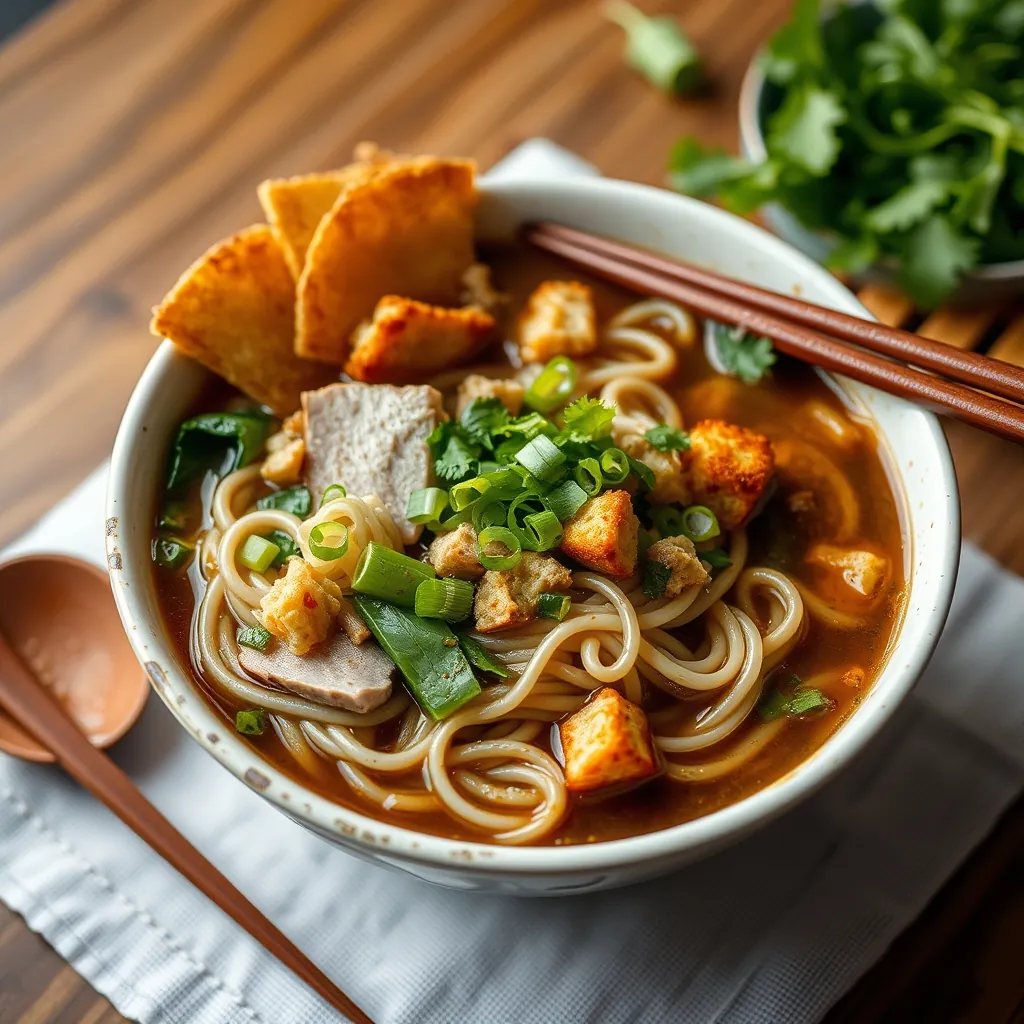
The noodles are the defining element. They are made from rice flour and water. The water comes from the Ba Le well in Hoi An. The well water has a specific mineral content. It is slightly alkaline. That alkalinity gives the noodles their chewiness. The noodles are also treated with lye water. Lye water is made from wood ash. The ash comes from specific trees on the Cham Islands. The combination of well water and ash water creates a noodle that is firm and springy. The noodles are cut thick. They are similar to udon noodles in shape. They do not become soft in the broth. They maintain their texture for the entire meal. That texture is the reason people seek out cao lau.
The pork preparation is specific. Pork belly is the primary cut. The belly is marinated in soy sauce, garlic, and five-spice powder. The five-spice powder reflects the Chinese influence. The pork is then braised until tender. The braising liquid becomes part of the broth. The pork is sliced thin and arranged on top of the noodles. The fat from the belly renders during braising. The fat coats the noodles. The fat carries the flavor. Some versions include shredded pork skin. The skin is fried until crispy. It adds texture and richness.
The broth is not a soup. It is a sauce. The broth is made from the pork braising liquid. It is thickened with pork stock. The consistency is similar to a light gravy. The broth is dark brown from the soy sauce. It is savory with a hint of sweetness. The sweetness comes from caramelized sugar. The broth is ladled over the noodles. It coats the noodles without drowning them. The noodles absorb the flavor. The broth is not meant to be drunk. It is meant to be mixed with the noodles and toppings.
The croutons are a distinguishing feature. They are made from leftover banh mi bread. The bread is cut into cubes. The cubes are fried in pork fat. The frying makes them golden and crispy. The croutons are added to the bowl just before serving. They stay crunchy for a few minutes. They soften as they absorb the broth. The contrast between the crunchy croutons and the chewy noodles is intentional. The texture changes as you eat. The croutons provide a counterpoint to the soft pork and herbs.
The herbs and greens are abundant. Bean sprouts provide crunch. Lettuce adds freshness. Mint and cilantro add aromatic notes. Banana blossom is a traditional addition. The banana blossom is thinly sliced. It has a slightly bitter flavor. The bitterness balances the richness of the pork. The herbs are piled on top of the noodles. You mix them into the bowl. The heat from the broth wilts the herbs slightly. The herbs release their oils. The flavor becomes integrated.
The history of cao lau is layered. The Chinese traders brought the noodle-making technique. The Japanese traders brought the preference for thick noodles. The Vietnamese added the local ingredients. The dish evolved over centuries. It became a Hoi An specialty. The dish is served in simple bowls. The presentation is rustic. The flavor is complex. The dish tells the story of the town. It is a fusion of cultures. It is a product of geography. It is a dish that cannot leave its home.
Finding the best cao lau requires some effort. The dish is available at street stalls and restaurants throughout Hoi An. The best versions come from family-run stalls. The stalls have been operating for generations. The recipe is passed down. The water is drawn from the same well. The noodles are made fresh each day. Look for stalls with a line of locals. The line indicates quality. The price is around 20,000 to 40,000 Vietnamese dong. The price is low. The value is high.
Ordering cao lau is straightforward. The menu will list it as cao lau. Some places offer variations. Cao lau dac biet is the special version with extra pork. Cao lau chay is the vegetarian version. The vegetarian version uses mushrooms instead of pork. The broth is made from vegetable stock. The noodles are the same. The croutons are still fried in oil. The vegetarian version is less common. It is worth seeking out if you avoid meat.
Eating cao lau follows a specific sequence. Mix the noodles and broth first. The broth should coat every noodle. Add the herbs and bean sprouts. Mix again. Break the croutons into smaller pieces. Mix the croutons into the bowl. The croutons should be distributed throughout. Eat the noodles and pork together. The noodles provide the chew. The pork provides the richness. The herbs provide the freshness. The croutons provide the crunch. The balance is achieved in each bite. The bowl should be finished within ten minutes. The croutons lose their crunch after that. The texture degrades. The dish is best eaten immediately.
A few practical tips improve the experience. Do not add extra chili or fish sauce. The dish is already balanced. Adding extra condiments disrupts the flavor. Do not ask for a fork. Chopsticks are the only tool. The noodles are thick enough to pick up easily. The broth is thick enough to cling to the noodles. The dish is self-contained. It does not need modification. Trust the recipe. Trust the tradition. Trust the water. Cao lau is a dish that belongs to Hoi An. It is a dish that rewards patience and attention. It is a dish that cannot be rushed.
Cha Ca: Turmeric Fish with Dill
Hanoi has a dish that commands attention. Cha ca is a sizzling performance. The fish arrives at the table in a bubbling pan. The aroma of turmeric and dill fills the air. The dish is a celebration of color and flavor. The fish is golden yellow from the turmeric. The dill is bright green. The green onions are charred. The peanuts add crunch. The rice noodles provide a neutral base. The combination is unforgettable.
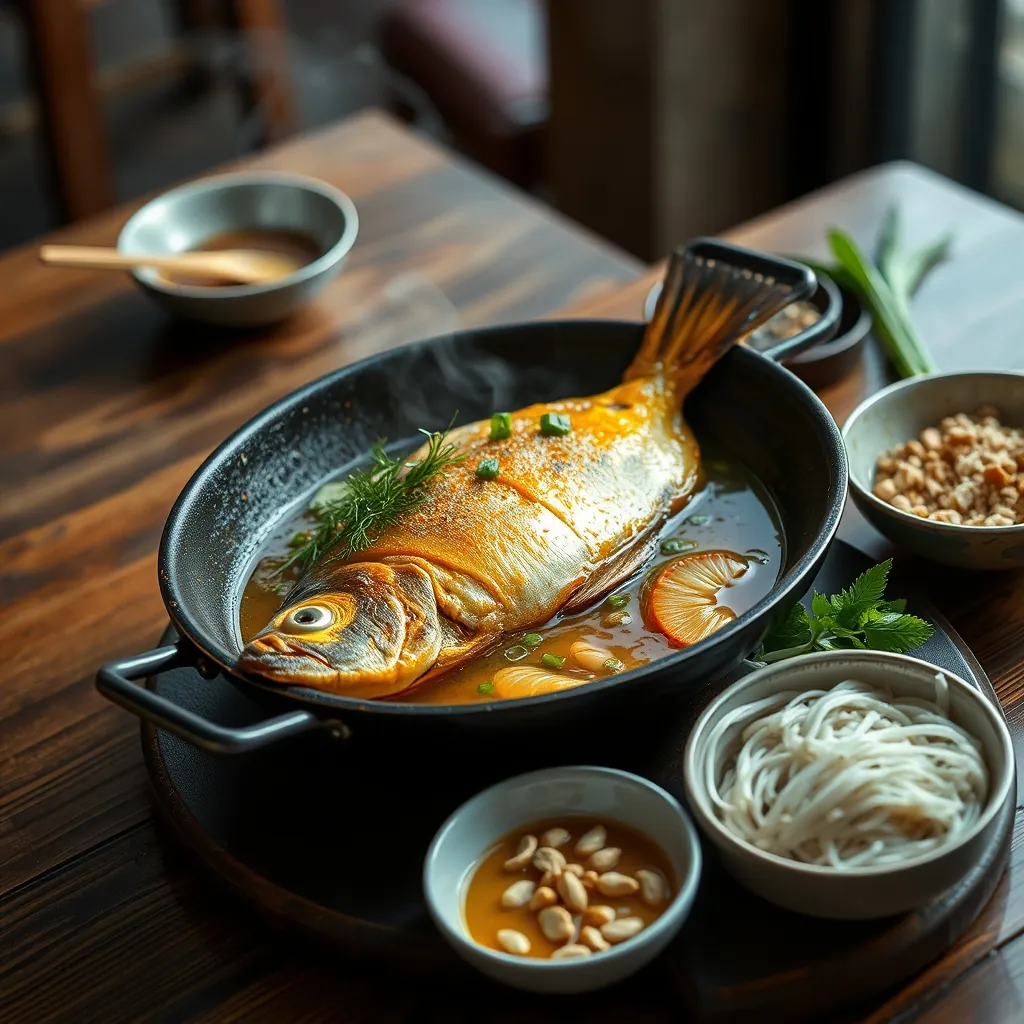
The fish is the centerpiece. Catfish or snakehead fish are the traditional choices. The fish is cut into chunks. The chunks are marinated in turmeric powder and galangal. Galangal is a root similar to ginger. It has a sharper, more citrusy flavor. The turmeric gives the fish its signature yellow color. The marinade also includes fish sauce, garlic, and shallots. The fish absorbs the flavors for at least an hour. The marinade penetrates the flesh. The fish becomes infused with the spices.
The cooking method is specific. The fish is fried in a pan with oil. The oil is hot. The fish sizzles immediately. The turmeric stains the oil yellow. The fish cooks quickly. The exterior becomes crispy. The interior remains tender. The dill is added near the end. The dill wilts from the heat. Its flavor becomes aromatic. The green onions are added at the same time. They char slightly. They add a smoky note. The pan is brought to the table while still sizzling. The sound announces the dish.
The history of cha ca is specific to Hanoi. The dish originated in the Old Quarter. The Do family created it in the 19th century. The family opened a restaurant. The restaurant was called Cha Ca La Vong. It still operates today. The restaurant serves only one dish. That dish is cha ca. The recipe has remained unchanged for generations. The restaurant is famous. The street where it sits is now called Cha Ca Street. The dish is a symbol of Hanoi. It is a point of pride.
The table presentation is interactive. The sizzling pan is placed on a burner. The burner keeps the fish hot. The fish continues to cook. The edges become crispier. The dill continues to wilt. The green onions continue to char. The diner controls the pace. The fish can be eaten immediately. It can be left to cook longer. The choice is personal. The pan stays hot for the entire meal.
The accompaniments are essential. Rice noodles are the base. The noodles are thin and white. They are served at room temperature. They provide a neutral canvas. The fish is placed on top of the noodles. The oil from the pan coats the noodles. The turmeric stains the noodles yellow. The noodles absorb the flavor. Roasted peanuts are sprinkled on top. The peanuts add crunch and richness. Fresh herbs are provided on the side. Mint, cilantro, and basil are common. The herbs add freshness. They cut through the richness of the fish.
The dipping sauce is critical. Shrimp paste is the traditional condiment. Shrimp paste is pungent and salty. It is diluted with lime juice and chili. The mixture becomes a dipping sauce. The sauce has a strong flavor. It is an acquired taste. Some diners prefer fish sauce instead. Fish sauce is lighter and more familiar. Both options are available. The sauce is used to season the noodles. It is not used as a dip for the fish. The noodles are dipped into the sauce. The fish is eaten on its own.
Eating cha ca follows a specific sequence. Take a portion of rice noodles. Place them in your bowl. Add a piece of fish. Add some dill and green onions. Sprinkle peanuts on top. Add fresh herbs. Dip the noodles in the sauce. Eat the combination in one bite. The textures and flavors should mix. The fish is crispy. The noodles are soft. The peanuts are crunchy. The herbs are fresh. The sauce is savory. The balance is achieved in each bite.
The best time to eat cha ca is lunch or dinner. The dish is heavy. It is not a breakfast food. The restaurant Cha Ca La Vong opens at 11 AM. It closes at 9 PM. The restaurant is always busy. The line can be long. The wait is worth it. The dish costs around 100,000 Vietnamese dong. The price is higher than street food. The quality justifies the cost. The experience is unique.
A few practical tips improve the experience. Do not add too much shrimp paste at once. Start with a small amount. Taste it first.
Leave a Reply